What is Lipase?
Lipase is a vital enzyme produced mainly in the pancreas, mouth, and stomach that breaks down dietary fats into fatty acids and glycerol. A lipase blood test, with a normal range often between 0-160 U/L, helps diagnose pancreatic diseases. Elevated levels (>160 U/L) usually indicate pancreatic damage (pancreatitis), while low levels may signal permanent pancreatic damage.
Everything You Need to Know
What level of lipase is concerning?
Lipase levels are generally considered concerning when they are 3 or more times higher than the upper limit of the normal range. This elevation is a strong indicator of acute pancreatitis. Normal lipase levels typically range from 12-70 U/L or up to 160 U/L depending on the lab, so significant elevation is usually >200U/L or higher.
When to worry about high lipase?
High lipase breast milk can develop a soapy, metallic, or sour smell or taste after storage due to excess lipase breaking down fats too quickly - but it remains completely safe and nutritious for babies.
Is high or low lipase worse?
It's normal to have a small amount of lipase in your blood. But if the cells of your pancreas are damaged, they will release larger amounts of lipase. So, high levels of lipase in your blood may mean you have pancreatitis, (an inflamed, swollen pancreas) or another type of pancreatic disease.
What does high lipase feel like?
Medications, lifestyle factors, and other medical conditions can also contribute to elevated lipase levels. Recognizing symptoms such as abdominal pain, nausea, or unexplained weight loss can help individuals take prompt action if lipase levels are elevated.
Main Details:
Function
Digestion: Lipase breaks down triglycerides (fats) into fatty acids and glycerol, allowing the body to absorb nutrients.
Lipid Metabolism: It helps manage fat storage and provides energy.
Transport: It aids in developing and delivering low-density lipoprotein (LDL) in the blood.
Applications
Medical: Used in enzyme replacement therapy for pancreatic dysfunction and potentially to help manage digestive disorders.
Industrial: Used in food production, dairy, laundry detergents, and manufacturing of biofuels.


Key Considerations for High Lipase Levels:
Acute Pancreatitis: Levels more than 3 to 10 times the normal limit usually indicate this condition.
Symptoms & Timing: The highest concern arises when high lipase is accompanied by severe abdominal pain that radiates to the back, nausea, or vomiting.
Other Causes: If not acute pancreatitis, high lipase can indicate renal failure, gallbladder disease, pancreatic tumors, or obstruction of the pancreatic duct.
Not Always Proportional: Very high lipase levels do not necessarily determine the severity of pancreatic disease.
ANALYTICAL RESULTS
| Test Item | Method / Ref. | Specification | Result | Conclusion |
|---|---|---|---|---|
| Identification | In-house ID / label claim | Lipase | Conforms | Pass |
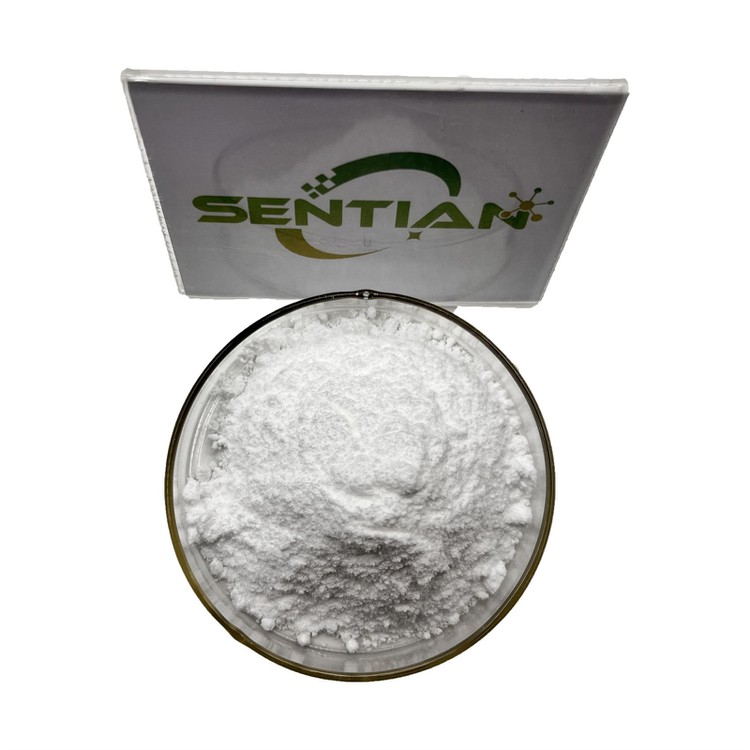
| Appearance | Visual | Off-white to pale cream powder | Off-white powder | Pass |
| Enzyme Activity | Supplier method / lipase activity assay | NLT 50,000 U/g | 53,200 U/g | Pass |
| Activity Unit Definition | Supplier-defined unit | Report only | U/g reported | Pass |
| pH (1% solution) | pH meter | 5.0 – 8.0 | 6.7 | Pass |
| Loss on Drying | Gravimetric | ≤ 8.0% | 4.1% | Pass |
| Lead (Pb) | ICP-MS / ICP-OES | ≤ 3.0 ppm | 0.19 ppm | Pass |
| Arsenic (As) | ICP-MS / ICP-OES | ≤ 1.0 ppm | 0.08 ppm | Pass |
| Cadmium (Cd) | ICP-MS / ICP-OES | ≤ 1.0 ppm | < 0.05 ppm | Pass |
| Mercury (Hg) | ICP-MS / ICP-OES | ≤ 0.10 ppm | < 0.01 ppm | Pass |
| Heavy Metals (Total) | Limit test / ICP | ≤ 10.0 ppm | Conforms | Pass |
| Total Plate Count | Plate count | ≤ 10,000 CFU/g | 1.5 × 10³ CFU/g | Pass |
| Yeast & Mold | Plate count | ≤ 100 CFU/g | < 10 CFU/g | Pass |
| Coliforms | Plate count | ≤ 30 CFU/g | < 10 CFU/g | Pass |
| E. coli | Absence test | Negative / 25 g | Not Detected | Pass |
| Salmonella | Absence test | Negative / 25 g | Not Detected | Pass |
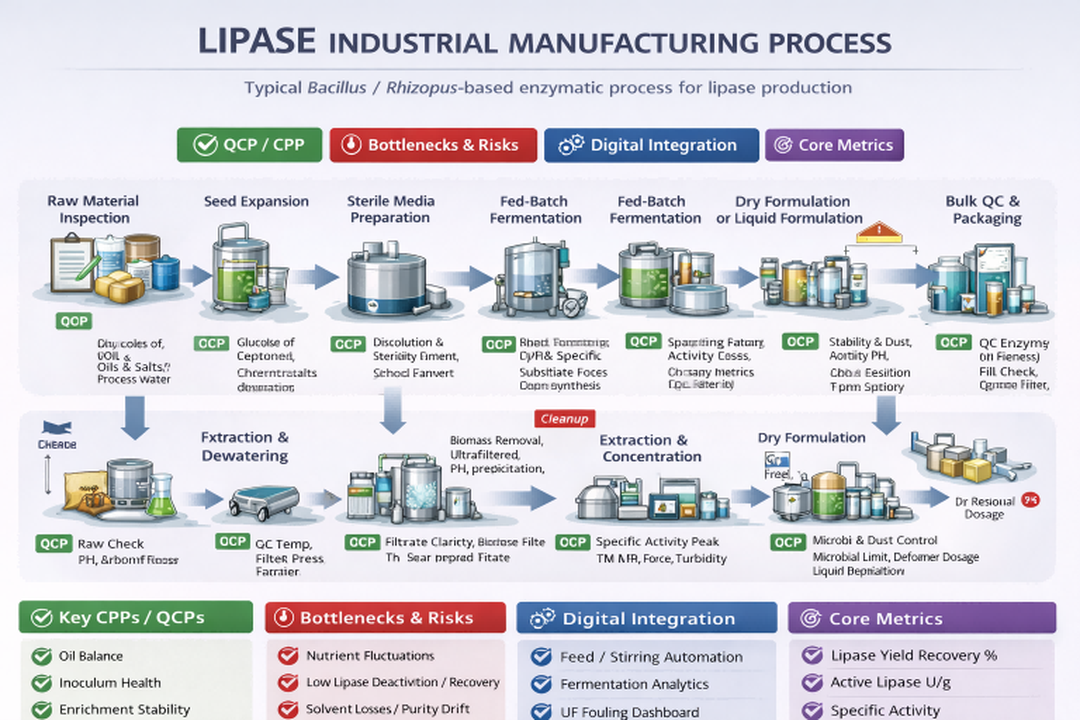
Production Process