


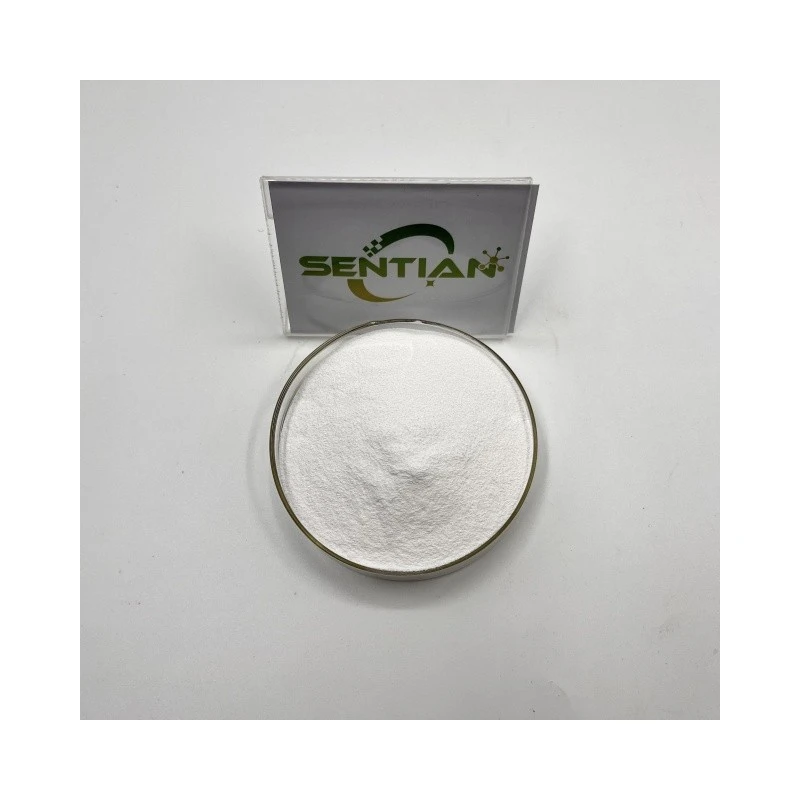
Xi'an Sentian Biotechnology Co., Ltd. is one of the leading manufacturers and suppliers of pure tryptophan in China. We are committed to providing high quality customized service and OEM&ODM private label service for global clients. Please feel free to buy bulk pure tryptophan in stock here from our factory. Also, free sample is available.

Pure tryptophan
L-Tryptophan is one of essential amino acids and the fourth limiting amino acid in animal diets, which means it could not be synthesized by the body, in addition, dietary supply through feed materials is usually insufficient.The deficiency of L-Tryptophan was generally characterized as decreased feed intake and efficiency, and slow growth rate. Considering L-Tryptophan playing a key role in growth performance and feed efficiency, it is recommended to add L-Tryptophan in diet to achieve the optimal amino acid balance and fulfill the digestible tryptophan requirement of animals, especially piglets, sows and poultry etc.
pure tryptophan
L-tryptophan
L-tryptophan
What is L-arginine useful for?
L-arginine is an amino acid that helps the body build protein. Your body usually makes all the L-arginine it needs. L-arginine is also found in most protein-rich foods, including fish, red meat, poultry, soy, whole grains, beans and dairy products. As a supplement, L-arginine can be used orally and topically.

L-tryptophan
What is the function of the L amino acids?
l-amino acid oxidases are flavin adenine dinucleotide-dependent enzymes present in all major kingdom of life, from bacteria to mammals. They participate in defense mechanisms by limiting the growth of most bacteria and parasites.

Frequently Asked Questions
pure tryptophan
What is L-tryptophan good for?
-
It may be a natural antidepressant and stress reducer. It may help treat hyperactivity in children. It may also treat manic episodes in people with bipolar disorder. L-tryptophan also decreases appetite.
What does L-tryptophan do to the brain?
-
Tryptophan is converted into the neurotransmitter serotonin in the brain, and serotonin in turn is active in areas associated with eating behaviors, passivity/violence, addiction, and depression. However, tryptophan and serotonin are also involved with many areas of cognition.
What does L-tryptophan do to the liver?
-
The addition of L-tryptophan (80 mg/kg) to a high-calorie diet (HCD) reduced lipid metabolism disorders in the liver. L-tryptophan reduced visceral fat accumulation (A), decreased total liver lipids (B) and triglycerides (C) compared to HCD rats but had no effect on hepatic total cholesterol (D).
Can I use L-arginine everyday?
-
The average dosage of l-arginine is between 6 grams to a maximum of 30 grams per day. The daily dose is normally divided into three smaller doses per day that won't exceed the maximum dosage. Do not take more than the maximum dosage of l-arginine.
Does arginine make you taller?
-
Arginine is an important amino acid which plays a role in height growth. It promotes the multiplication of cells at the growth plate in bones to help bones grow longer.
L-tryptophan
Tryptophan is an amino acid needed for normal growth in infants and for the production and maintenance of the body's proteins, muscles, enzymes, and neurotransmitters. It is an essential amino acid. This means your body cannot produce it, so you must get it from your diet.
What does L-tryptophan do?
It may be a natural antidepressant and stress reducer. It may help treat hyperactivity in children. It may also treat manic episodes in people with bipolar disorder. L-tryptophan also decreases appetite.
Should I take L-tryptophan or melatonin?
For those who are most interested in promoting sleep, supplementing with melatonin may be the best choice ( 27 ). Doses of 0.5–5 mg per day have been used, with 2 mg being the most common dose ( 32 ). For those who take tryptophan itself, doses of up to 5 grams per day have been reported ( 29 ).
What is the advantage of tryptophan?
The body uses tryptophan to help make melatonin and serotonin. Melatonin helps regulate the sleep-wake cycle, and serotonin is thought to help regulate appetite, sleep, mood, and pain. The liver can also use tryptophan to produce niacin (vitamin B3), which is needed for energy metabolism and DNA production.
