What is Maltogenic Amylase?
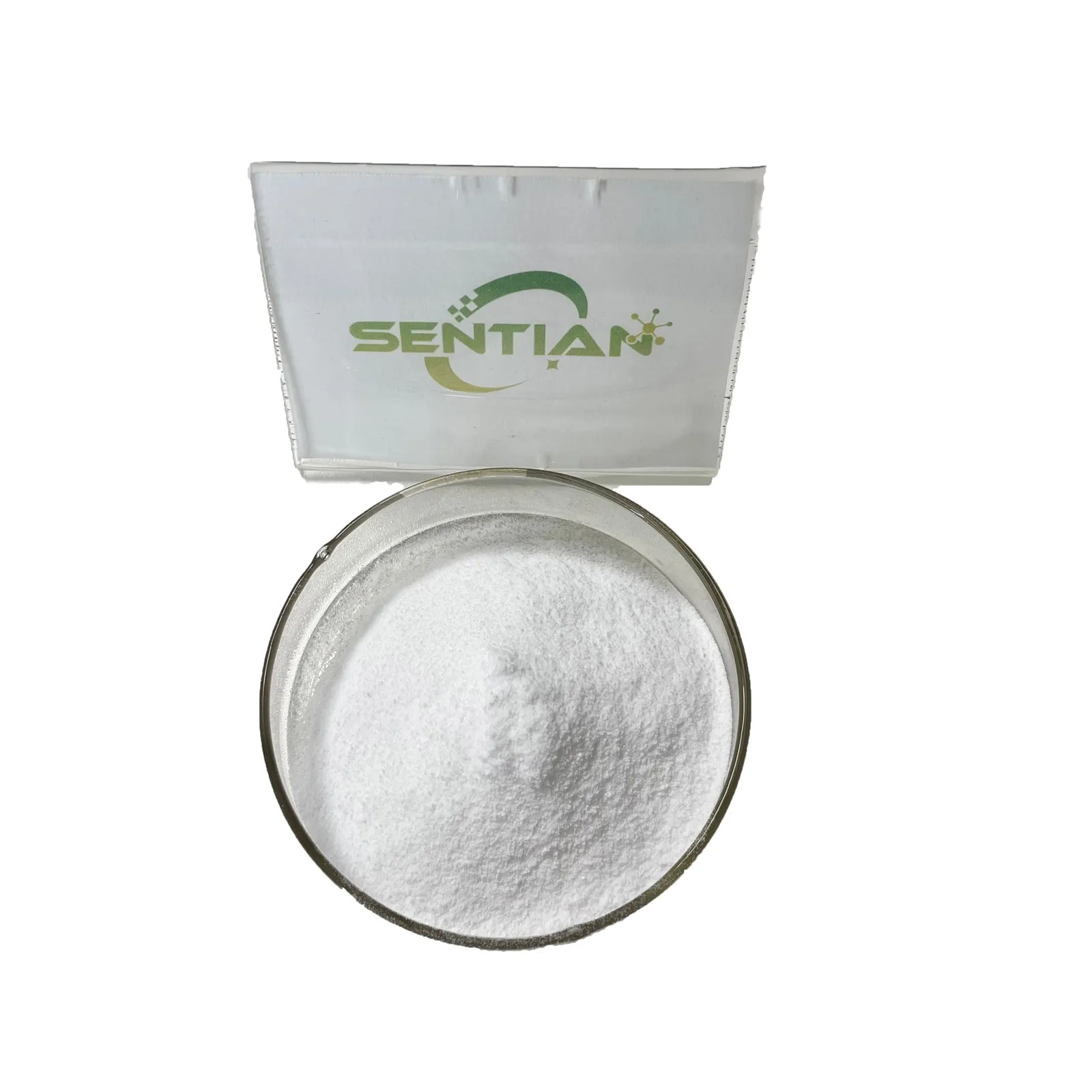
Maltogenic amylase is an enzyme widely used in the baking industry to extend the shelf life of bread, enhance crumb softness, and improve elasticity. It works by hydrolyzing starch into maltose, reducing anti-staling (starch retrogradation). It acts as a clean-label, anti-aging agent for dough.
Everything You Need to Know
What is maltogenic amylase?
In simple words, maltogenic amylase is a hydrolytic enzyme that breaks down the starch into soft sugar.
What level of amylase is concerning?
An amylase level is generally considered concerning, particularly for acute pancreatitis, when it is three or more times the upper limit of normal (ULN). While normal blood levels are typically 30 to 110–220 U/L, a diagnosis of severe pancreatitis often involves values exceeding 300–400 U/L.
Which foods are high in amylase?
Amylase-rich foods help break down complex carbohydrates (starches) into sugars, aiding digestion. Top sources include ripe bananas, mangoes, papayas, and raw honey. Additionally, germinated or sprouted grains (such as wheat, rice, barley, and millet) and fermented foods like kefir, kimchi, and sauerkraut are high in digestive amylase.
Is amylase good or bad for you?
Amylase is an essential enzyme produced by the pancreas and salivary glands that breaks down carbohydrates. It is good and necessary for digestion. However, high levels in the blood indicate that the pancreas is inflamed or damaged, usually due to conditions like pancreatitis, while very low levels can indicate pancreatic or kidney damage.
Main Details:
Function: It is an exo-acting enzyme that breaks down starch polysaccharides from the non-reducing end to produce maltose.
Benefits in Baking: It provides long-lasting softness and moisture to bread and baked goods, reducing product wastage and enabling extended distribution networks.
Dough Improvement: It improves the structure of the dough and facilitates handling.
Clean Label: Often used as an alternative to chemical emulsifiers to keep products fresh.
Safety: It is generally recognized as safe (GRAS) for use in baking, commonly produced from Bacillus strains.
Applications: Primarily used in baked goods (bread, cakes) but also in brewing and for producing specific starch-based syrups.

Key Amylase-Rich Foods
Fruits: Ripe bananas (contain amylase and maltase), mangos (amylase content increases as they ripen), and papaya.
Sprouted Grains & Legumes: Sprouting increases enzyme activity, making sprouted wheat, barley, and lentils excellent sources.
Amylase-Rich Flour (ARF): Made from germinated cereals (wheat, rice, ragi) and pulses (moong), this is often added to baby porridge to improve digestibility.
Fermented Foods: Raw honey, kimchi, sauerkraut, yogurt, and kefir.
Others: Avocado and kiwi.
Tips for Maximizing Amylase Intake
Eat Raw: Heat destroys digestive enzymes, so enjoy fruits and fermented foods raw.
Chew Well: Salivary amylase begins breaking down starches before they even reach your stomach.
Try Sprouting: Sprouting legumes or grains at home boosts their amylase content.
ANALYTICAL RESULTS
| Test Item | Method / Ref. | Specification | Result | Conclusion |
|---|---|---|---|---|
| Identification | In-house ID / label claim | Maltogenic Amylase (EC 3.2.1.133) | Conforms | Pass |
| Appearance | Visual | White to light yellow powder | Light yellow powder | Pass |
| Enzyme Activity | Amylase assay / supplier method | NLT 20,000 U/g | 21,400 U/g | Pass |
| Activity Unit Definition | Supplier-defined unit | Report only | U/g reported | Pass |
| pH (1% solution) | pH meter | 4.5 – 7.0 | 5.6 | Pass |
| Loss on Drying | Gravimetric / USP 731 | ≤ 8.0% | 4.2% | Pass |
| Lead (Pb) | ICP-MS / ICP-OES | ≤ 5.0 mg/kg | 0.15 mg/kg | Pass |
| Arsenic (As) | ICP-MS / ICP-OES | ≤ 3.0 mg/kg | 0.08 mg/kg | Pass |
| Cadmium (Cd) | ICP-MS / ICP-OES | ≤ 0.5 mg/kg | < 0.05 mg/kg | Pass |
| Mercury (Hg) | ICP-MS / ICP-OES | ≤ 0.5 mg/kg | < 0.01 mg/kg | Pass |
| Total Plate Count | Plate count | ≤ 50,000 CFU/g | 1.2 × 10³ CFU/g | Pass |
| Coliforms | Plate count | ≤ 30 CFU/g | < 10 CFU/g | Pass |
| E. coli | Absence Test | Negative / 25g | Not Detected | Pass |
| Salmonella | Absence Test | Negative / 25g | Not Detected | Pass |
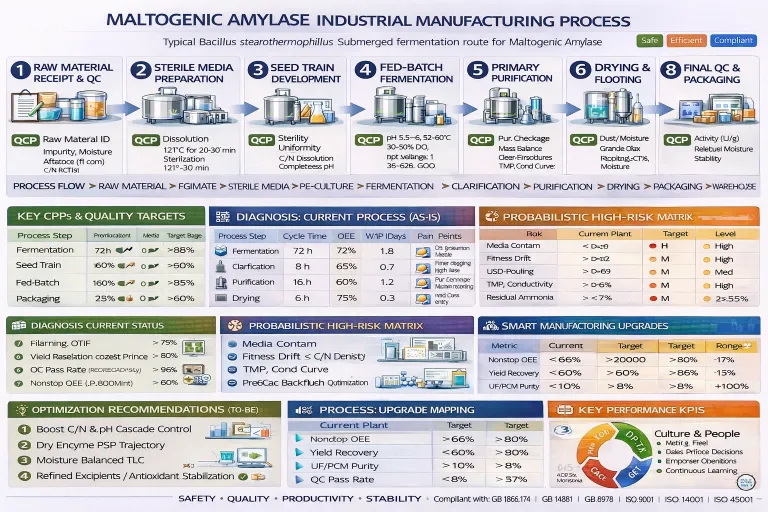
Production Process