


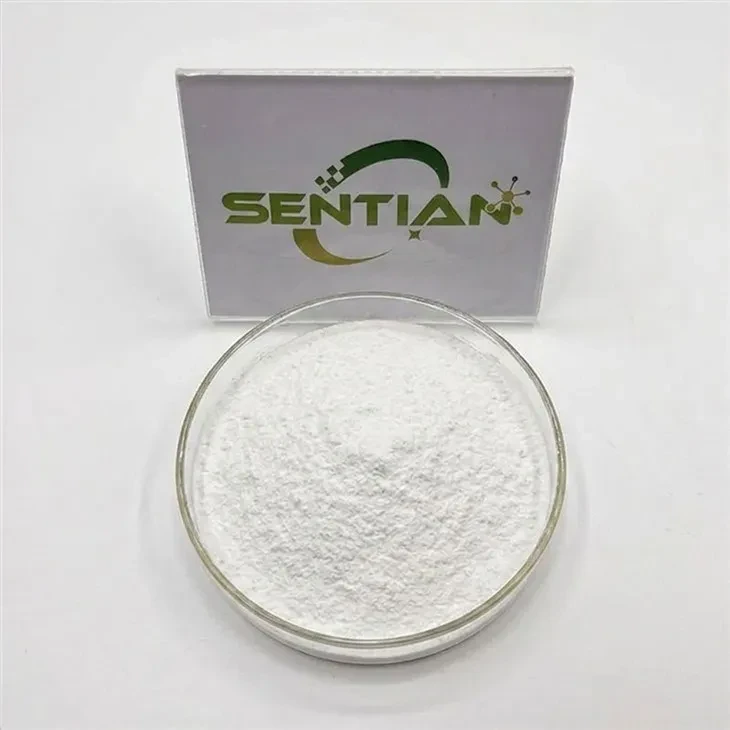
Xi'an Sentian Biotechnology Co., Ltd. is one of the leading manufacturers and suppliers of oleanolic acid olive leaf extract in China. We are committed to providing high quality customized service and OEM&ODM private label service for global clients. Please feel free to buy bulk oleanolic acid olive leaf extract in stock here from our factory. Also, free sample is available.
What is Oleanolic Acid Olive Leaf Extract?
Oleanolic Acid Olive Leaf Extract comes from the leaves of the olive tree (Olea europaea), and its main characteristic compound is oleanolic acid. The extract is formulated into a standardized ingredient, where the level of the active compounds is kept consistent through controlled extraction, concentration, and purification processes, suitable for use in a variety of botanical formulations. The use is known for its relationship with traditional food systems of plant origin and the tendency that products are developed using clean label methods. The extract is generally in the form of a fine powder (light yellow to white in color) and is normally tested for characteristics like oleanolic acid content, identification, moisture content, ash content, and microbiological standards. With a proven botanical profile, it is extensively used in dietary supplement products, functional food products, cosmetic ingredient systems, and other applications that demand standardized natural extracts. The ingredient can be formulated in a variety of ways and can be used in combination with other botanical extracts, vitamins, minerals, and functional ingredients to provide a number of product concepts. It is once again gaining significant attention as an ingredient of plant origin that can be used in product development around the world.

COA
| Item | Specification | Result |
| Product Name | Oleanolic Acid Olive Leaf Extract | Conforms |
| Botanical Source | Olea europaea L. Leaf | Conforms |
| Active Ingredient | Oleanolic Acid | Conforms |
| Specification | Oleanolic Acid ≥90.0% | 92.38% |
| Appearance | Brown Yellow Fine Powder | Conforms |
| Odor & Taste | Characteristic | Conforms |
| Particle Size | 95% Pass 80 Mesh | Conforms |
| Loss on Drying | ≤5.0% | 3.21% |
| Ash Content | ≤8.0% | 2.74% |
| Bulk Density | 0.40–0.65 g/mL | 0.53 g/mL |
| Tapped Density | 0.55–0.85 g/mL | 0.69 g/mL |
| Extract Solvent | Ethanol & Water | Conforms |
| Heavy Metals | ≤10 ppm | Conforms |
| Lead (Pb) | ≤2.0 ppm | <0.20 ppm |
| Arsenic (As) | ≤1.0 ppm | <0.10 ppm |
| Cadmium (Cd) | ≤1.0 ppm | <0.10 ppm |
| Mercury (Hg) | ≤0.1 ppm | <0.02 ppm |
| Total Plate Count | ≤10,000 CFU/g | <1,000 CFU/g |
| Yeast & Mold | ≤100 CFU/g | <10 CFU/g |
| Escherichia coli | Negative/10 g | Negative |
| Salmonella | Negative/25 g | Negative |
| Staphylococcus aureus | Negative/10 g | Negative |
Sentian Bio provides free samples, OEM/ODM customized products, and professional technical support. Contact us anytime at sales3@sentianbio.com or LEAVE A MESSAGE!
Industry Background
Olive trees (Olea europaea) are an old cultivated crop in Mediterranean areas, and olive leaves, being a naturally available botanical resource, have received increasing interest for commercial applications in virtue of the valuable plant constituents. Thanks to the innovation of extraction technologies, analytical testing, and standardization of ingredients, olive leaf extracts have become more and more precisely defined ingredients for formulation in different fields. The growth of clean label and the preference for natural raw materials, and the revival of interest in sustainable use of agricultural resources have further enhanced the development of the ingredients from olive leaves. The use of olive leaves in particular adds value to resources used in olive cultivation and processing, contributing to the optimization of the resources. This has driven a shift in the global market toward transparency and traceability around ingredients, as well as uniformity in ingredient evaluation, and it's resulted in more consistency in the use of standardized botanical extracts in the dietary supplement, functional food, cosmetic, and personal care sectors. Oleanolic Acid Extract is one such example of the innovative use of ancient natural resources that can be optimized for the new demands of the international natural ingredient market with the use of modern processing technologies.
Development History
The olive leaf has been used in the Mediterranean herbology tradition, and since then, it has gained more and more popularity in scientific and technological studies due to the naturally occurring compounds present in the olive leaf and its potential applications. The expanding global botanical extract market saw the development of better extraction, filtration, concentration, and purification techniques to more effectively use olive leaf and obtain more consistent ingredient profiles. New analytical techniques, such as chromatographic testing technologies, have made it easier to identify and assess the quality of the most important botanical markers – like oleanolic acids – and have helped to create standardised products. As the years have passed, better management of agricultural resources and the concepts of sustainable processing have also helped to spread the use of other products derived from their use in the food sector, especially by making better use of the plant material produced during olive cultivation. Clean label product developments and the growing trend to traceability for the ingredients used in products have spurred additional innovation in its manufacturing, such as customizing specifications, optimizing processing methods, and implementing better quality control procedures. In today's market, Oleanolic Acid Powder is a well-established category in the botanical ingredient market, which has evolved by being derived from a natural source and combining with new extraction technology to offer a consistent and diverse ingredient for use in dietary supplements, functional foods, cosmetics, and other plant-based product formulations.

Applications
1. Dietary Supplement Industry
Oleanolic Acid Olive Leaf Extract may be utilized for its medicinal benefits in dietary supplement products, as a botanical ingredient in capsules, tablets, powders, and blended plant products. The standardized botanical profile is useful for considering applications in formulations where natural ingredient concepts and plant-derived composition are key considerations.
2. Functional Food and Beverage Industry
The extract can be added to functional food and/or beverage products, in which botanical ingredients are present, for product differentiation. It can be developed as powdered mixtures, nutritional drinks, and other food-based products based on the positioning of natural plant extracts.
3. Cosmetic and Personal Care Industry
It finds uses in cosmetic products as a natural ingredient derived from plants, usually those containing botanical extracts and natural ingredients. Can be incorporated into creams, lotions, serums, and other personal care products focusing on botanical-based product concepts.
4. Beauty and Skincare Ingredient Development
Its botanical source and compatibility with different cosmetic formulation systems make it suitable for cosmetic formulation development, emphasizing the use of plant resources from the Mediterranean region and clean beauty.
5. Herbal and Botanical Formulation Industry
The extract is also used in combination with other plant extracts in compound herbal products to make a complex formulation. The standardised botanical formulation makes it an ideal ingredient for formulations with specified botanical composition.
6. Natural Ingredient and Specialty Product Development
It is also used in innovative food, beverage, and cosmetic applications where there is a focus on sustainable ingredients, natural innovation in the food sector, and clear ingredient choice. It is derived from olive oil, which will help brands create products from known botanical sources.
Factory

Certificate

Exhibition
