


Pumpkin seed protein powder is an excellent source of all essential amino acids, but it can be a near-complete vegetable protein source that is often supplemented by legume or grain protein to get the nutrition grade right in an industrial formulation. The global plant-based ingredient market is growing and is gaining a new supplier in the form of pumpkin seed protein powder, which has a very special physicochemical profile, can be used to certify clean labels, and is allergen-free. The technical parameters, formulation mechanism and correct application of this botanical raw material are crucial for engineering high-performing commercial food and supplement products.
Amino Acid Composition and Protein Quality Parameters
Essential Amino Acid Distribution: Raw material contains high levels of critical amino acids as a basis for commercial formulation with high nutritional value without the need for animal matrices.
Amino Acid Considerations: Limited analytical evaluations suggest that minor changes in multi-ingredient mixes, including using complementary pulse proteins, can help to achieve an overall balance in amino acid scoring for finished products.
The biological availability and digestive performance of the protein concentrate are greatly improved by the use of modern mechanical processing and thermal optimisation techniques; these are known as In Vitro Protein Digestibility (IVPD).
Industrial Formulation Techniques and Dosage Factors
Guidelines for inclusion: For typical industrial uses, the ratio of dry weight to produce is about 5 to 25%. This varies depending on what product is being targeted, such as a dry-blended beverage, baked snack, or extruded texturized product.
Hydration/Moisture Management: Formulators will need to do some tuning of the amount of fluid addition during the dough mixing or batter preparation stage because of the moderate water-binding abilities.
Synergistic Blending Mechanics: The addition of complementary plant protein(s) to the ingredient helps to reduce any minor native flavor profile, while providing a well-rounded nutritional profile when blended in a large-scale retail product.

Physicochemical Stability and Processing Performance
Thermal Tolerance Thresholds: The protein matrix is reliably stable within the range of typical baking and high-pressure extrusion temperatures, and does not undergo significant structural changes.
Particle Size Distribution: Fine – Air-classified milling grades help to avoid bridging and clogging in high-speed commercial dry-blending runs and ensure flowability through automated hopper systems.
Chemical Integrity: The wholesale ingredient is stored with a multi-layer, food-grade packaging in cool and dry conditions, which helps ensure that its chemical integrity is preserved and it does not absorb moisture for as long as 24 months.
Commercial Applications across Global B2B Sectors
Sports Nutrition Formulations: These are used in powdered formulations that are clean and allergen free, such as dry powder shakers, meal replacement drinks and recovery drinks.
Functional Bakery and Snacks: Added to high-protein cookies, artisanal bread loaves and savory crackers to improve the structure and adding more nutrients to the product.
Extruded Meat Analogues: Used as a meat-like fibre in a plant-based burger patty and in alternative meat nuggets to create a meat texture.
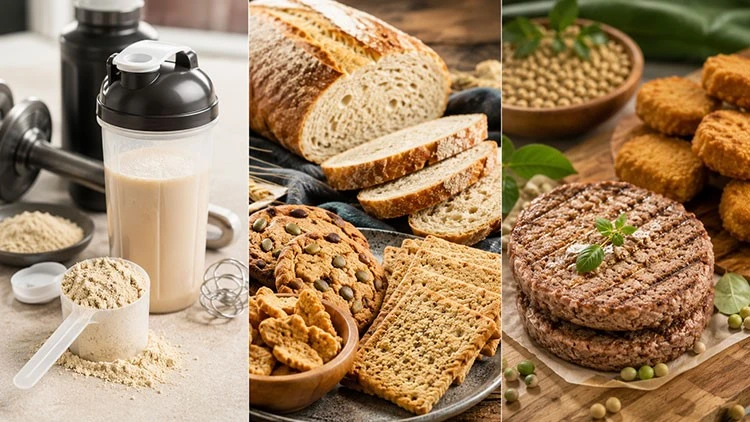
Is pumpkin seed protein powder a complete protein?
Pumpkin seed protein powder is an outstanding and highly functional, sustainable, and versatile botanical raw material for modern industrial food manufacturing. With its unique technical characteristics, careful dosages of inclusion and appropriate combination with other ingredients in the multi-ingredient matrix designs, companies can indeed scale their innovative product lines that are allergen-free and meet the strict requirements of the global market.
Sentian Bio provides free samples, OEM/ODM customized products, and professional technical support. Contact us anytime at sales3@sentianbio.com or LEAVE A MESSAGE!
FAQ
1. Is pumpkin seed protein powder free from major food allergens?
Answer: Yes, it is naturally free from common ingredients in the diet like soy, dairy, gluten, peanuts, and tree nuts, which is ideal for special hypoallergenic formulations.
2. How does the powder behave during automated industrial manufacturing?
Answer: It is a fine particle architecture with reliable thermal stability that can be easily integrated into automatic dry blending, high-pressure extrusion, and baking processes without causing blockages in the process.
3. What standard documentation accompanies bulk wholesale shipments?
Answer: Each commercial batch comes with a detailed Certificate of Analysis (CoA), non-GMO statements and allergen declarations, as well as facility compliance certificates, such as ISO, HACCP, and GMP.
4. What are the recommended storage conditions for inventory stability?
Answer: Store in the original packaging in which it was packaged, in a cool, dry, and well-ventilated warehouse away from direct sunlight, ensuring a 24-month shelf life.
References
1. Millán, F., et al. (2020). "Obtaining and characterization of pumpkin (Cucurbita pepo L.) seed protein isolates and evaluation of their functional properties." Food Chemistry, 310, 125920.
2. Ivanova, A., et al. (2021). "Nutritional and technological evaluation of cold-pressed oilseed meals as novel ingredients in functional foods." Journal of Food Science and Technology, 58(4), 1450-1459.
3. Schmidt, J., et al. (2022). "Structural modifications and in vitro protein digestibility of plant-based protein concentrates following advanced processing." Innovative Food Science & Emerging Technologies, 78, 103012.
4. Rueda, E., et al. (2023). "A comprehensive review of alternative plant proteins: Extraction technologies, functionality, and industrial applications." Critical Reviews in Food Science and Nutrition, 63(12), 1890-1915.