


The negative effects of red yeast rice (RYR) primary raw materials are usually related to the unknown active concentration of monacolin K, the incorrect formulation of the dosage, instabilities of the matrix, and/or potential contamination with mycotoxins such as citrinin during the fermentation process of the raw materials.
When dealing with raw active ingredients for the manufacture of nutraceuticals and dietary supplements, the evaluation of the negative profiles is crucial to ensure formulation integrity, product stability, and regulatory compliance across the world. Red yeast rice extract raw material is a widely used botanical resource that contains natural secondary metabolites. But if these extracts are not properly processed or standardized, or if they are not carefully used from a technical aspect so that it is technically compatible with the product, then there are several physical, chemical, and quality control issues that can arise. The knowledge of how the attributes of raw ingredients affect the final products to reduce quality risks, before the product is commercialized, is of vital importance to the formulator and B2B brand owner.
Technical Factors Influencing Red Yeast Rice Ingredient Potency and Dosage Variability
1. Inconsistent Active Standardization:
The finished potencies of exports may vary when there are fluctuations in the active monacolin K ratio in the raw materials for bulk red yeast rice. The constituents' profile in each batch run is normally variable due to uncontrolled solid-state fermentation.
2. Raw Material Batch Heterogeneity:
There is a different physical density and distribution of the active grain of rice in the substrate due to natural variations in the rice grain and the fermentation strains used. When raw material properties vary, setting standard tablet pressing parameters is a challenge for the formulators.
3. High Inclusion Mass Constraints:
Unconcentrated red yeast rice powder capsules will need more volume to deliver desired amounts of ingredients. This physical bulk will impact end-user compliance and compressibility of the formula.
4. Synergistic Matrix Interference:
The chemical stability may change when unrefined red yeast rice botanicals are mixed with co-actives that are reactive. Some carrier matrices can cause the active monacolin structures to be altered during conventional dry blending.
Formulation Challenges and Ingredient Stability Considerations for Manufacturers
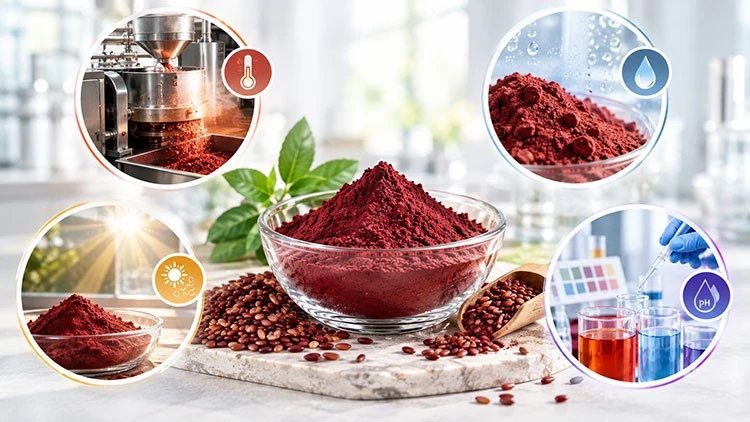
1. Thermal Degradation Sensitivity:
High shearing compression or granulation during the production of red yeast rice may cause overheating, which can cause degradation of sensitive bioactive compounds (such as monacolin K) in red yeast rice raw materials. It is necessary to tightly control the processing temperatures in an industrial process in order to maintain the molecular integrity.
2. Hygroscopic Moisture Absorption:
Raw fermented red yeast rice powders tend to absorb water from the environment very quickly and can clump together or cause changes in physical flowability. Too much moisture exposure in ambient conditions adversely affects the structural stability of the dry premix.
3. Light and Oxidative Degradation:
The natural red pigments and secondary metabolic components in red yeast rice extract powders are liable to break down due to direct UV light and oxygen, which will lead to changes in physical appearance and shelf life.
4. pH-Dependent Active Conversion:
Active open-loop monacolin may be converted to other, less desirable, lactone structures by highly acidic/basic liquid vehicle environments that change the equilibrium of raw ingredients in the liquid dosage media.
Industrial Quality Control and Mycotoxin Risks in Raw Red Yeast Rice Processing
1. Citrinin Mycotoxin Contamination:
Citrinin can be produced as a by-product of fungal incubation if inadequate fermentation management is used for raw materials of red yeast rice. HPLC batch-wise testing is compulsory for compliance with global mycotoxin limits.
2. Heavy Metal Bioaccumulation:
Agricultural soils are unmonitored, and trace amounts of lead, cadmium, or arsenic may be absorbed by raw substrate rice. All bulk raw materials from outside suppliers should be tested in accordance with the ICP-MS requirements set by the industrial manufacturer.
3. Microbiological Load Excursions:
Processing raw material powders of red yeast rice in improperly dried raw materials or environments where the raw material is not sterile can result in the presence of spore-forming bacteria, which could compromise the finished product's shelf safety.
4. Exogenous Pesticide Residues:
When fermentation of red yeast rice for use in dietary supplements is performed, the grains used for the fermentation process may be of sub-standard quality, leading to the presence of traces of organophosphate pesticide residues in the fermentation batches, thus requiring thorough multi-residue screening before the fermentation process.
Regulatory and Compliance Risks Across International B2B Markets
Different regulatory standards for the level of monacolin K in red yeast rice raw materials are in force in various parts of the world, including Europe, North America, and Asia. Specs have to be customized for each export market by the formulator.
1. Strict Clean-Label Documentation Needs:
For modern clean-label retail demands, complete traceabilities, non-GMO verifications and allergen-free certifications are required for powders of red yeast rice.
2. Label Claim Discrepancy Vulnerability:
Testing procedures for bioactives in complex yeast-based food supplements are not always conducted correctly, leading to incorrect potency claims and potentially to regulatory audits' scrutiny of commercial brand owners.
3. Import Detention via Analytical Mismatch:
Discrepancies in the methodology used for the assays performed by manufacturers in other countries and the national customs testing agencies can cause delays in shipments or rejection of bulk cargo at the border points.

Best Practices for Mitigating Red Yeast Rice Raw Material Complications
1. Implementation of Closed-Loop Fermentation:
Converting from conventional open-bed culture to stainless-steel bioreactors with automated control of environmental parameters leads to the standardization of the environment that minimizes undesirable fermentation by-products of red yeast rice.
2. Supercritical Fluid Purification:
The use of an advanced supercritical carbon dioxide extraction process eliminates the unwanted lipid fractions and the trace amounts of mycotoxins, and at the same time, concentrates monacolin complexes without synthetic chemical solvents.
3. Micro-Encapsulation Protective Technology:
Functional coatings of shellac, ethylcellulose, or lipids around the raw particles of red yeast rice isolate active components from oxygen, moisture, and acid in digestive fluids.
4. Validated HPLC-MS Analytical Testing:
HPLC/MS provides accurate chemical fingerprinting of red yeast rice raw materials and assures complete uniformity of the raw materials from batch to batch.
What are the bad side effects of red yeast rice?
As is typical of all other dietary supplement ingredients, the potential negative effects on health of red yeast rice at the raw material level are critical to understand for commercial formulators who are aiming for high-quality, stable, and fully compliant dietary supplements. B2B manufacturers can overcome formulation challenges and ensure reliable integration of botanical raw ingredients by controlling the active monacolin K consistency, implementing advanced purification processes to remove the presence of citrinin, safeguarding against moisture degradation, and strictly following the international quality parameters.
Sentian Bio provides free samples, OEM/ODM customized products, and professional technical support. Contact us anytime at sales3@sentianbio.com or LEAVE A MESSAGE!
FAQ
Q: What is the main cause of raw red yeast rice ingredient instability in tablet formulations?
A: The degradation of active monacolin K in the manufacturing of red yeast rice tablets is mainly caused by moisture and high compression temperature.
Q: How do B2B manufacturers prevent citrinin contamination in red yeast rice extract powder?
A: To ensure low-citrinin profiles, manufacturers use cultures of Monascus purpureus which have been selected for low citrinin production, carefully controlled bioreactor parameters, and post-fermentation resin purification.
Q: Does red yeast rice extract powder interact with other botanical raw materials in premixes?
A: Moisture or acidic botanicals may be capable of hydrolysis or physical agglomeration, so protective excipients (carriers) or micro-encapsulation technology must be used.
Q: Why do global regulatory standards vary for red yeast rice active monacolin concentrations?
A: There are different scientific approaches for the daily intake limits of monacolin by regional health authorities, which is why manufacturers need to create customized standardized raw material grades for specific target markets.
References
1. Endress, J. R., & Schmidt, M. L. (2021). Quality assessment and regulatory standardization of Monascus purpureus fermented rice derivatives in global commercial supply chains. Journal of Agricultural and Food Chemistry, 69(14), 4102-4112.
2. Formato, A., Galli, R., & Vitiello, S. (2022). Stability kinetics and particle size optimization of fermented red rice active extracts under thermal and oxidative stress. Food Chemistry & Process Technology, 378, 131980.
3. Liang, K., Zhang, Y., & Chen, H. (2020). Technological strategies for citrinin mitigation in industrial solid-state and submerged fermentation of red yeast rice. Process Biochemistry, 95, 185-194.
4. European Food Safety Authority (EFSA). (2023). Scientific opinion on the safety evaluation and analytical standardization of monacolins in red yeast rice raw materials. EFSA Journal, 21(3), e07845.