


Pea protein and hydrolyzed pea protein are the same, except for the additional enzymatic process, which involves further digestion of the pea protein, resulting in smaller peptide molecules, making it more soluble and digestible than standard pea protein.
Understanding Pea Protein and Hydrolyzed Pea Protein Structure
Both Pea protein and hydrolyzed pea protein are extracted from yellow pea, but produced in different ways to produce different functional properties. Food manufacturers, supplement brands, and formulation specialists need to know these differences to know which ingredient would be more appropriate to use for specific applications.
1. Standard Pea Protein Production Process
Protein extraction: The cleaning, milling, and separating process of yellow peas is done for the extraction of protein.
Protein concentration: The extracted protein fraction is treated to get the protein concentration, often using filtration and drying technologies.
Final structure: The protein is mainly present as a protein molecule from the plants and has not been changed in the amino acid sequence.
The pea protein is commonly used and is regarded as a nutritious plant protein source that offers good formulation possibilities, as a neutral protein source.
2. Hydrolyzed Pea Protein Manufacturing Process
Enzymatic hydrolysis: Pea protein undergoes partial hydrolysis of the peptide chains by means of enzymes that are food-grade.
Peptide formation: Generation of shorter peptides, with the same amino acid composition as the original protein.
Functional Improvement: Smaller peptide structures can offer improved dispersibility and enhanced interactions with liquid systems.
Hydrolyzed pea protein is not a new raw material, but rather a processed version of pea protein that is more suitable for particular uses where the processing properties are more desirable.
Key Differences Between Pea Protein and Hydrolyzed Pea Protein
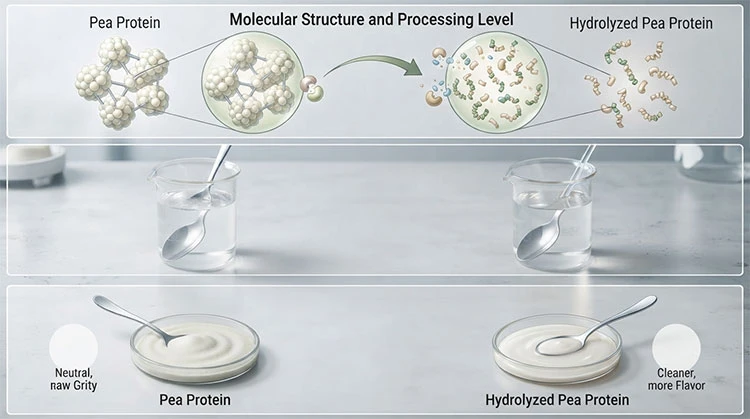
1. Molecular Structure and Processing Level
The main difference between pea protein and hydrolyzed pea protein is the amount of processing applied.
Pea protein: Contains bigger protein molecules in the form of whole protein, which need to undergo normal digestion procedures to be broken down.
Hydrolyzed pea protein: It contains smaller peptides obtained by enzymatic hydrolysis, which is a partially pre-digested protein structure.
This structural difference will have an impact on the behaviour of the ingredient in various types of formulations, particularly in beverages, nutrition powders and functional food products, for manufacturers.
2. Solubility and Dispersion Performance
When developing protein-based products, solubility is an important consideration.
Pea protein: It has good functionality characteristics, but it may need the optimization conditions of processing to obtain smooth dispersion.
Smaller peptide chains can usually result in better water interaction, which can aid in incorporation into liquid formulations, which is called hydrolyzed pea protein.
Hydrolyzed pea protein is generally regarded as suitable for ready-to-mix powders, clear protein beverages, and for those situations where the texture of the product plays an important role.
3. Taste and Texture Characteristics
Proteins from plants can have formulation issues due to their natural flavor, consistency, and texture.
Pea protein: Can be earthy and have a thicker texture when used in high concentration and not processed properly.
Hydrolyzed pea protein: The extent of hydrolysis can have an impact on flavor, viscosity, and its sensory properties.
Hydrolyzed pea protein is frequently used in conjunction with flavor systems, sweeteners, or other plant materials to give a balanced end product.
Formulation Techniques for Pea Protein and Hydrolyzed Pea Protein Applications
Based on the end product type, the process steps, and the desired effect of the product, pea protein or hydrolyzed pea protein can be used.
1. Sports Nutrition Powder Formulas
Pea protein powders are often incorporated into plant protein products due to their balanced amino acid profile and their 'clean label' positioning.
Some of the factors that will need to be taken into account when formulating are:
Choosing optimum protein concentration.
Optimization of flavour system for sensory acceptance.
To boost the amino acid profile when a comprehensive one is desired, combining with complementary plant proteins.
Hydrolyzed pea protein can be used when making a mixable, lighter-texture product is desired.
2. Ready-to-Drink Protein Beverages
Excellent dispersion and stability are required for liquid products.
Important factors include:
pH compatibility: Proteins may have different performance in different beverages, depending on the pH.
Formulation processing stability: Formulas should be tested for pasteurization and/or sterilization processing stability.
Viscosity control: Too thick can be a problem for consumers.
Smaller peptides might be beneficial for processing in beverage applications, and for this reason, hydrolyzed pea protein can be considered.
3. Functional Food and Powdered Nutrition Products
These can both be used in:
Protein bars
Meal replacement powders
Plant-based nutrition blends
Bakery products
Instant drink mixes
The choice is made based on the desired texture, manufacturing machines, the cost of the product, and its positioning.
Dosage Factors and Stability Considerations in Manufacturing
Depending on the purposes of the formulation, the level of usage of pea protein and hydrolyzed pea protein will differ.
1. Recommended Inclusion Factors
Manufacturers typically evaluate:
The percentage of protein that needs to be included in the final product.
The balance of flavors was improved at the higher protein levels.
Interactions with other functional ingredients and minerals, and carbohydrates.
Flowability and storage stability of the powder.
These teams of professionals generally perform pilot testing to establish the best ratio of inclusion, and not all the parameters of dosage are the same for all.
2. Management for Storage and Stability
Ingredients can be stored in a manner that ensures good quality products.
Key practices include:
Maintaining conditions for products in cool, dry areas.
Prevention of overexposure of powders to moisture.
Appropriate packaging materials with good moisture-resistant properties.
Running stability testing when developing the product.
Hydrolyzed pea protein and pea protein should be tested for shelf-life after blending with other ingredients.

Choosing Between Pea Protein and Hydrolyzed Pea Protein for Industry Applications
Both of them are mainly used depending on the product requirements.
Pea protein can be used for traditional protein powders, nutritional blends and bars, as well as in other types of plant-based formulations that maintain the integrity of the protein.
Hydrolyzed pea protein is ideal for use in: Specialized beverage systems, instant formulations, and systems that need enhanced solubility and processing flexibility.
Hybrid formulations: Some companies mix the two together to get a balanced product that is cost-effective, has a suitable texture, is nutritiously positioned, and is functional.
When choosing a trustworthy pea protein ingredient, a buyer needs to take into account the protein content, hydrolysis percentage, particle size, microbiological purity, certificates, and consistency of the supplier.
What is the difference between pea protein and hydrolyzed pea protein?
To sum up, pea protein and hydrolyzed pea protein have the same plant origin, but have different processing technology and functional properties. Standard pea protein is a versatile plant-based protein ingredient that includes intact protein structures, while hydrolyzed pea protein has smaller protein peptide structures offering greater solubility and unique formulation applications. Knowing these differences will enable the food and supplement producer to choose the right ingredient for the right application, production process, and product performance.
Sentian Bio provides free samples, OEM/ODM customized products, and professional technical support. Contact us anytime at sales3@sentianbio.com or LEAVE A MESSAGE!
FAQ
1. What is the difference between pea protein and hydrolyzed pea protein powder?
Pea protein powder is a whole protein powder extracted from yellow peas, and hydrolyzed pea protein powder is a mixture of peptides after undergoing enzymatic hydrolysis. The key difference is the processing level, resulting in different solubility, texture, and formulation performance.
2. Is hydrolyzed pea protein better for beverages than regular pea protein?
The smaller peptides from the hydrolysate may offer benefits for certain beverage products, such as dispersion and decreased texture problems. The optimum choice, however, depends on the full set of recipes, processing conditions, and product properties desired.
3. How is hydrolyzed pea protein made?
Hydrolyzed pea protein is made through a process of using food-grade enzymes to break down pea protein. In the controlled hydrolysis, some protein chains are chopped into smaller peptides, and the source of the original plant protein is retained.
4. Can pea protein and hydrolyzed pea protein be used together?
Yes. Some manufacturers use a blend of pea protein and hydrolyzed pea protein to balance nutrition, sensory characteristics, manufacturing efficiency, and production costs.
References
1. Carbonaro, M., Maselli, P., & Nucara, A. (2021). Structural aspects of legume proteins and their functional properties in food applications. Foods, 10(4), 821.
2. Lam, A. C. Y., Can Karaca, A., Tyler, R. T., & Nickerson, M. T. (2021). Pea protein isolates: Structure, functionality and applications in food systems. Food Research International, 141, 110101.
3. Gao, Y., Li, D., Liu, X., & Chen, X. (2022). Recent advances in plant protein hydrolysis and peptide-based functional food ingredient development. Trends in Food Science & Technology, 119, 326–338.
4. McClements, D. J., Grossmann, L., & Chen, J. (2023). The role of plant proteins in the development of next-generation sustainable foods. Annual Review of Food Science and Technology, 14, 87–108.