


What is Rennet Enzyme Powder?
Rennet Enzyme Powder is a preparation of an enzyme in powder form, which is used by the dairy industry to start the process of separating milk into curds and whey in making cheese. An ingredient made of concentrated enzymatic protein that is specifically chymosin or a blend of coagulating enzymes and is selective in its action on milk casein structure under controlled food processing conditions. In contrast to regular dairy additives, it is particularly appreciated for its functionality and precision in coagulation management, enabling cheese makers to create the desired curd texture, moisture levels, and elasticity for various cheese varieties. Its manufacture is normally done by animal extraction, microbial growing, or fermentation biotechnology, which also enables industrial buyers to choose the specifications to match production requirements, product labelling, and regional market preferences. Technically, it is generally supplied in the form of a fine powder with low moisture content, high enzyme stability, standardized enzyme strength, good dispersion properties, and compatibility with the industrial dosing system. It is concentrated, which makes it suitable for easy storage, transportation, and incorporation into automatic dairy manufacturing production lines. While the processing technology for dairy technology is continuously developing in its evolution to precision and standardization, it will continue to be a key functional ingredient in the cheese production systems of today's modern industry.

COA
| Items | Specification | Test Method | Results |
| Appearance | Off-white to light yellow powder | Visual | Conforms |
| Odor | Characteristic | Organoleptic | Conforms |
| Enzyme Activity | ≥ 10,000 IMCU/g | IMCU Method | Conforms |
| Loss on Drying | ≤ 8.0% | USP <731> | Conforms |
| Ash Content | ≤ 5.0% | USP <281> | Conforms |
| pH (1% Solution) | 4.5 – 6.5 | USP | Conforms |
| Heavy Metals | ≤ 10 ppm | ICP-MS | Conforms |
| Lead (Pb) | ≤ 2 ppm | ICP-MS | Conforms |
| Arsenic (As) | ≤ 1 ppm | ICP-MS | Conforms |
| Cadmium (Cd) | ≤ 1 ppm | ICP-MS | Conforms |
| Mercury (Hg) | ≤ 0.1 ppm | ICP-MS | Conforms |
| Total Plate Count | ≤ 1,000 CFU/g | USP <2021> | Conforms |
| Yeast & Mold | ≤ 100 CFU/g | USP <2021> | Conforms |
| E. coli | Negative | USP <2022> | Conforms |
| Salmonella | Negative | USP <2022> | Conforms |
Sentian Bio provides free samples, OEM/ODM customized products, and professional technical support. Contact us anytime at sales3@sentianbio.com or LEAVE A MESSAGE!
Industry Background
Rennet Powder has a long history in the dairy industry, the world's oldest food processing industry, where the use of enzyme-based coagulation is a critical step in the production of cheese. Traditional animal-sourced rennet was commonly employed in the traditional dairy production systems in small and local scale in past years; however, the intensive industrialisation in the food production systems has changed the traditional methods into highly processed and technology-based processes. The growth of both retail and foodservice uses and the industrial use of dairy as an ingredient drove the need for manufacturers to provide more continuous solutions that are consistent, scalable, and efficient – solutions that can be relied upon for robust, large-volume production operations. This development and commercialization of microbial fermentation and fermentation-produced chymosin technologies has now made a major contribution to the modern rennet supply chain. Meanwhile, advances in enzyme purification, biotechnology platforms, and process control systems have allowed producers to provide greater uniformity in activity level and reproducibility batch-to-batch. Complementarily, the growing trend of clean-label positioning, sustainability concerns, and a variety of food preferences and habits have helped to cement the use of non-animal rennet sources. At the global level, this segment is well aligned with innovation in the dairy processing automation, precision fermentation, and ingredient engineering space, which helps to boost efficiency and ensure product consistency.
Development History
Its development traces back to the early traditional process of cheese making, where naturally occurring rennet from a variety of animal stomach sources was used in simple artisanal production to coagulate milk. This was an early method, which was frequently used, but there was no standardization of the strength, stability, or consistency of enzymes. Cheese production expanded, and more reliable and more scalable coagulation ingredients were needed as the switch to industrial cheese processing was made. It gradually began to have a problem with supply and process control, and it was not as economical for large-scale manufacturing systems. In the 20th century, microbiology and fermentation technology advanced, allowing for the use of microbial-based rennet enzymes for a more stable and controlled cheese production process, thereby eliminating the need for complete dependence on animal rennet. The stage was important to the industry because it helped to make the cheese uniform and to increase its use in various cheese production methods. With further progress in enzyme purification and drying methods, it became possible to convert liquid enzyme preparations into stable powdered enzyme preparations to improve the stability, transportation, and dosing characteristics. These developments also helped with the integration into modern automated dairy processing systems with consistent coagulation performance. The dairy industry has evolved into a biotechnology-based industry that has scaled up to supply standardized production, processes, and ingredients, such as Microbial Rennet.
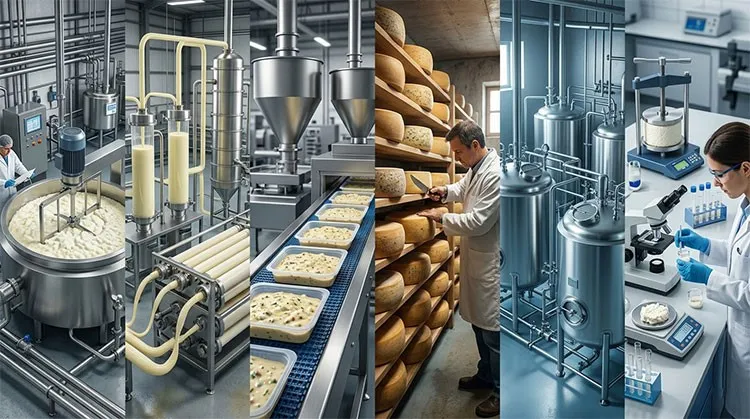
Application
1. Industrial Cheese Manufacturing
Rennet Powder is primarily used as a basic coagulation factor in large cheese output production systems to provide good control of curd formation, cheese texture structuring, and standardization of the process in various cheese types.
2. Dairy Ingredient Processing Industry
In the dairy industry, used for controlled milk protein separation in the manufacture of intermediate dairy products in order to prepare the product for further formulation and downstream food processing.
3. Food Manufacturing & Processed Foods Industry
Used in specific food production processes where dairy products or dairy ingredients are added to food products, such as sauces, fillings, and ready-to-eat products.
4. Specialty Cheese Production Sector
Used in artisanal and specialty cheese development to provide added flexibility in formulation and a specific coagulation profile to create a unique texture and product.
5. Industrial Fermentation-Based Food Systems
Incorporated into food production, where the fermentation process plays an important role, in food production and where protein modification processes are structured with enzyme technology.
6. Dairy Technology & R&D Applications
In research and product development for coagulation performance testing, process development optimization, and new cheese formulation and production method testing.
Factory

Certificate

Exhibition
