


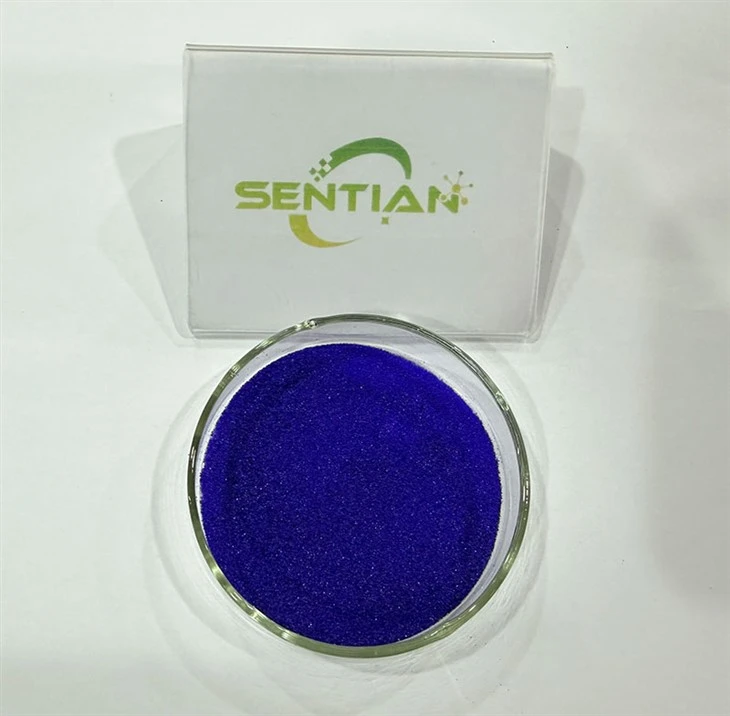
What is Copper Peptide Raw Material?
Copper Peptide Raw Material is a bio-active peptide-copper complex, usually in the form of Glycyl-L-Histidyl-L-Lysine Copper (GHK-Cu), provided in bulk in a standardized form to be used in the formulation of cosmetic and personal care products. It is meant to be used as a functional cosmetic ingredient, meaning that it is added to finished products, but not used as a stand-alone product. This material is a naturally derived tripeptide structure chelated with copper ions, forming a stable coordination compound, which is very compatible with aqueous-based systems. The production in manufacturing involves a series of manufacturing processes to control the quality of the product, such as those involving controlled synthesis, purification, and crystallization or lyophilization, followed by multi-step quality control assessments like HPLC assay verification, peptide integrity testing, copper content ratio standardization, microbial limit compliance, and heavy metal residue analysis. Commercial grades are available with high purity, in fine powder form, and with high water solubility, and are ideal for use in emulsions, gels, serums, essences, scalp care formulations, and other complex formulation systems. It is normally supplied in containers resistant to moisture and light and of pharmaceutical grade, alongside a variety of laboratory sample quantities through to large-scale bulk shipments to cater for various phases of a product's development and mass production.

COA
.
| Item | Specification | Test Method | Result |
| Identification (Peptide) | Positive (GHK structure confirmed) | HPLC / MS | Pass |
| Copper Complex Confirmation | Confirmed Cu²⁺ coordination | UV-Vis Spectroscopy | Pass |
| Assay (GHK-Cu Content) | ≥ 98.0% | HPLC | 99.20% |
| Copper Ion Content | 5.0% – 8.0% | ICP-MS | 6.30% |
| Peptide Purity | ≥ 90.0% | HPLC | 94.50% |
| Loss on Drying | ≤ 5.0% | Gravimetric Method | 3.10% |
| Residue on Ignition | ≤ 2.0% | Muffle Furnace | 1.20% |
| Heavy Metals (Total) | ≤ 10 ppm | ICP-MS | < 5 ppm |
| Lead (Pb) | ≤ 2 ppm | ICP-MS | 0.6 ppm |
| Arsenic (As) | ≤ 1 ppm | ICP-MS | 0.3 ppm |
| Mercury (Hg) | ≤ 0.1 ppm | ICP-MS | < 0.05 ppm |
| Cadmium (Cd) | ≤ 1 ppm | ICP-MS | 0.2 ppm |
| pH (1% aqueous solution) | 5.5 – 7.5 | pH Meter | 640.00% |
| Solubility | Completely soluble in water | Visual Test | Pass |
| Microbial Limit | ≤ 100 CFU/g | Microbial Culture | < 10 CFU/g |
| Yeast & Mold | ≤ 10 CFU/g | Microbial Culture | < 5 CFU/g |
| E. coli / Salmonella | Absent | Microbial Test | Not Detected |
Sentian Bio provides free samples, OEM/ODM customized products, and professional technical support. Contact us anytime at sales3@sentianbio.com or LEAVE A MESSAGE!
Dosage
A recommended concentration of Copper Peptide Powder in cosmetic products is 0.05%–0.3% active in the final product, where the most common concentrations in commercial cosmetic formulations are around 0.1%, which is the balanced standard level that can be used for designing the formulation. In cosmetic manufacturing practice, the range is used depending on the type of product and system structure, for water-based serums, essences and ampoules, a lower level of approximately 0.05%–0.1% is frequently selected because of its good solubility and good system clarity while maintaining good dispersion stability in the aqueous phase, for emulsions, lotions and multi-functional cosmetic formulations, a usage is kept at 0.1%–0.3% can be considered as optimal to obtain good integration with oils, emulsifiers and dispersion stabilizers, without affecting the texture or dispersion stability of the formulation, and for high-performance or concentrated active cosmetic formulations, the usage is adjusted close to 0.3% under validated formulation conditions. Industry reference values are not set standards, and the final dosage should always be determined by formulation trials, stability tests of the product, and compatibility studies with other raw materials. Furthermore, all usage rates and concentrations should meet the cosmetic regulations and safety assessment criteria for target markets, including the EU, USA, and Asia, to ensure the products conform to the local regulations and the safety assessment of the finished product dossiers.
Store
1. Temperature control:
Keep in storage areas where temperatures are below 25°C to avoid risk of degradation due to extended heat exposure in the warehouse during the storage period and/or seasonal fluctuations in temperature.
2. Dry environment:
Store in a low-moisture environment since moisture can lead to increased moisture uptake in the powder that can impact flowability and long-term physical stability.
3. Light protection:
Even though packaging is light-resistant, it is still recommended that the cartons be stored away from direct sunlight or any intense artificial lights; this will 'de-stress' the packaging material by reducing the need for the packaging to fight the light.
4. Sealed condition maintenance:
After opening the original package, ensure it is tightly closed, and re-seal it after each sample to reduce exposure to air.
5. Segregated storage:
Store in a separate area from strong oxidising agents, volatile chemicals, or raw material which are highly reactive.
6. Clean warehouse management:
To ensure hygiene control in production or cosmetic/raw material production areas, store in a clean and dust-free area set aside for cosmetic or functional raw materials.
7. FIFO inventory system:
Follow the first-in, first-out inventory rotation system to make certain that GHK-Cu Powder is used in the same order that they were purchased and not stored for too long after the intended use.
8. Handling control:
Shorten time spent in transfer between storage and production areas and apply normal protective handling practices that ensure packaging integrity and maintain the quality of the material.

Applications and Synergies
Copper Tripeptide-1 Powder is extensively integrated into the most up-to-date formulation systems of cosmetics, mainly in the category of skincare, scalp care, and aesthetic cosmetic formulations, as a multi-functional peptide-based active ingredient. In formulation, it is generally employed in water-based serums, essence systems, ampoule concentrates, lotion emulsions, and gel-texture type formulations that must be uniformly dispersed in an aqueous system and remain stable. The molecular structure enables the use of its low-viscosity properties in such products as daily-use lightweight formulations as well as in structured systems where a higher concentration is required for a functional product in the more premium lines of cosmetics. From the formulation synergy point of view, it can easily be blended with other hydrating ingredients like hyaluronic acid, glycerin, beta-glucan, which are used in cosmetic bases to support the moisture, and it can also be easily mixed with amino acids, peptide complexes, and protein-based cosmetic actives in multi-functional formulations. It also shows a good formulation complementarity with botanicals, like green tea, centella asiatica, or aloe-based ingredients, allowing to develop multi-layered product concepts, including plant-based cosmetic formulation elements, alongside synthetic ones. It can be formulated into a multi-active product platform with controlled pH in more advanced systems, such as with niacinamide, panthenol, and mild derivatives of vitamin derivatives. Furthermore, it is commonly applied to scalp and haircare products, either alone or in association with conditioning polymers, mild surfactant systems, and natural haircare polymers, and is a valuable tool for diversifying the product positioning in professional haircare products.
Factory

Certificate

Exhibition
