


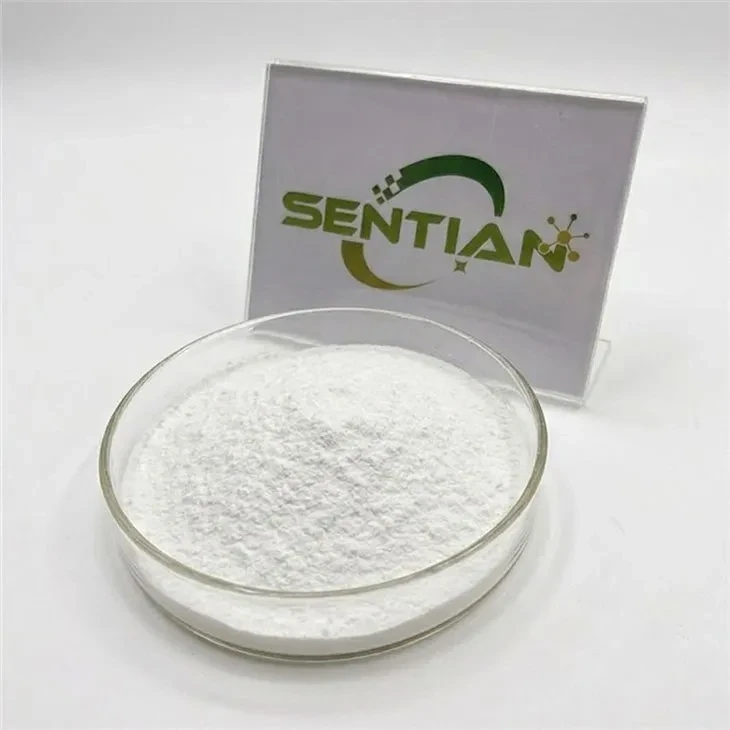
What is DHM Powder?
DHM Powder (Dihydromyricetin Powder) is a powdered plant extract rich in flavonoids, mainly derived from Ampelopsis grossedentata, which is commonly used in the industrial production of various food, beverage, cosmetic, and nutraceutical formulations. It is located as a standardised botanical input for extensible production systems where specification control, consistency, and reliability of the production system are significant when buying such products. It is often packaged in refined powder form with different purity levels to allow manufacturers to choose the appropriate specifications to meet the requirements of various architectures of formulation, including dry blends, encapsulated products, and reconstituted powder systems. The production usually involves a series of extraction and purification operations with attention paid to uniformity of batches and control of impurities, and drying operations to stabilize the final product for storage and transportation. The physical profile makes it easy to handle in a high-throughput manufacturing line, such as blending and compression lines, as well as encapsulation lines. Leveraging its ability to be used in a variety of excipients and carriers, product developers can take advantage of its versatility in formulation design and seamlessly tap into existing OEM/ODM product pipelines. It is also often assessed for characteristics like particle size distribution, moisture content, and flowability that directly impact production efficiency and product consistency.

COA
| Item | Specification | Result | Test Method |
| Assay (Dihydromyricetin) | ≥98.0% | 98.35% | HPLC |
| Appearance | White to Off-White Fine Powder | Conforms | Visual |
| Identification | Positive | Conforms | HPLC |
| Odor | Characteristic | Conforms | Organoleptic |
| Taste | Characteristic | Conforms | Organoleptic |
| Particle Size | 100% Pass 80 Mesh | Conforms | USP <786> |
| Loss on Drying | ≤5.0% | 2.18% | USP <731> |
| Residue on Ignition | ≤1.0% | 0.32% | USP <281> |
| Bulk Density | 0.30–0.60 g/mL | 0.48 g/mL | USP <616> |
| Tap Density | 0.40–0.80 g/mL | 0.63 g/mL | USP <616> |
| Heavy Metals | ≤10 ppm | <10 ppm | ICP-MS |
| Lead (Pb) | ≤2.0 ppm | <0.5 ppm | ICP-MS |
| Arsenic (As) | ≤1.0 ppm | <0.2 ppm | ICP-MS |
| Cadmium (Cd) | ≤1.0 ppm | <0.1 ppm | ICP-MS |
| Mercury (Hg) | ≤0.1 ppm | <0.05 ppm | ICP-MS |
| Total Plate Count | ≤1,000 CFU/g | <100 CFU/g | USP <2021> |
| Yeast & Mold | ≤100 CFU/g | <10 CFU/g | USP <2021> |
| Escherichia coli | Negative | Negative | USP <2022> |
| Salmonella | Negative/25g | Negative | USP <2022> |
Sentian Bio provides free samples, OEM/ODM customized products, and professional technical support. Contact us anytime at sales3@sentianbio.com or LEAVE A MESSAGE!
Industry Background
The industry background of Dihydromyricetin Powder stems from the worldwide expansion of the botanical extract industry, with the world's appetite for botanical raw materials still growing in the food, beverage, cosmetic, and nutraceutical manufacturing industries. A growing trend has been the increased migration towards clean-label and plant-based products, leading to a need for standardized botanical ingredients with consistent specifications and a stable supply chain in OEM/ODM product development. It falls into this category: the flavonoid Extract category is a popular category of functional formulation inputs, not consumer products. On the demand side, the advanced drying and purification technology enabled better control over the purity and particle size of the product, as well as batch consistency, making it suitable for use in industries with great demands. Looking at the demand side, ingredient traceability, documentation, and regulatory compliance, including COA, GMP/ISO standards, are key priorities for manufacturers and private label brands to comply with the requirements of international markets. Concurrently, the global sourcing network has made botanical extracts more readily available, cost-effective, and competitive, making it a part of the global supply chains of ingredients. In general, its industry background is a reflection of the general trend toward inter-standardized, natural origin ingredients and highly structured and organized global manufacturing systems.
Development History
The history of the development is closely related to the evolution of botanical extraction science and the industrial need for standardized plant-derived flavonoid components. The first applications of Ampelopsis grossedentata extracts were of a simple physical extraction process, which lacked control over purity and consistency and was typically employed in the context of traditional botanical research. As the field of phytochemical engineering and processing technology has progressed, more sophisticated approaches have been slowly implemented, such as optimizing solvent - to achieve greater purity control - optimization of chromatography - separation and purification - membrane filtration - and low-temperature drying - to improve stability and consistency from batch to batch. It evolved from an idea of providing a crude extract to a very standardized category of ingredients ideal for large-scale industrial production as the global demand for plant-based raw materials grew within the food, beverage, cosmetic, and nutraceutical manufacturing industries. At the same time, developments in particle engineering and processing, which were aimed at the formulation, were helping suppliers to adjust the physical characteristics of the particles to the demands of the OEM/ODM manufacturing. Over the last few years, the general trend of clean-label and plant-based formulation has contributed to its development, resulting in better specification grading, production scalability, and overall better integration into the global supply chain, thus turning Vine Tea Extract Dihydromyricetin into a well-established and widely used botanical ingredient in today's industrial formulations.

Applications
1. Functional beverage industry
Botanical use as an ingredient in powdered drink mixes, ready-to-mix drinks, and formulation systems with plant-based ingredients that are used to differentiate products and to achieve a clean label.
2. Dietary supplement manufacturing (OEM/ODM)
Dihydromyricetin Bulk Powder is used as capsules, tablets, and powder blends as a standardized raw material, private label development, and large-scale contract manufacturing.
3. Cosmetic and personal care formulations
Botanical extracts are incorporated into skincare bases and topical product bases like creams, serums, emulsions, etc., as a part of the formulation of the cosmetic system in modern cosmetic systems.
4. Food ingredient industry
Used in fortified foods, functional powders, and the development of nutritional products, especially products that highlight the use of natural-origin ingredients.
5. Nutraceutical R&D and product innovation
Botanical ingredients are included in ingredient libraries used by new product developers to assess the stability, compatibility, and processing characteristics of botanical ingredients in experimental products.
6. Raw material distribution and wholesale supply
Provided in bulk to ingredient suppliers and contract manufacturers that are part of a standard portfolio of botanicals, available for worldwide supply chains.
Production Process

Certificate

Exhibition
