


DHM (dihydromyricetin) is mainly applied as a multifunctional botanical ingredient in functional beverages, nutraceutical formulations and cosmetic systems, as a plant-derived compound suitable for formulation stability, flavour system compatibility and for functional positioning in modern product development, due to its antioxidant content.
DHM Used in Functional Beverage Formulations
DHM in beverage systems is widely applied as a solubilized or microencapsulated botanical ingredient for next-generation functional drinks.
1. Ready-to-drink (RTD) beverage systems
To achieve good clarity and stability in the water-based drinks, DHM is incorporated in the formulation with the help of solubilization aids or by dispersion of the substance at a nano level.
It is also typically combined with botanicals (tea polyphenols, citrus flavonoids) to produce multi-layered flavors.
When properly processed, DHM can be used to support "clean label botanical positioning" for formulators, while not significantly impacting taste.
2. Powdered beverage mixes
Spray-dried carriers are used to improve the dispersibility of DHM in instant drink powders.
Flowability and prevention of agglomeration are sometimes achieved by the use of maltodextrin or dietary fiber matrices.
When buffered, it is chosen for use in acidic beverage systems (pH 3-5).
DHM Used in Nutraceutical and Food Ingredient Systems
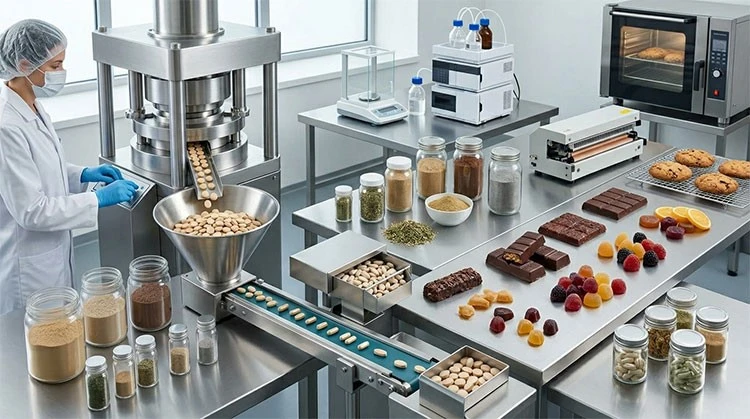
In nutraceutical development, DHM (dihydromyricetin) is used as a standardized botanical ingredient for capsule, tablet, and functional food formulations.
1. Capsule and tablet formulations
DHM powder is mixed with microcrystalline cellulose and excipients to obtain uniform compression.
Content uniformity and the minimisation of segregation during manufacturing are achieved using granulation techniques.
It is frequently formulated with other botanicals for multi-botanical complexes with other plant extracts containing flavonoids to create diversified formulation profiles.
2. Functional food integration
DHM is added to nutritional snacks, gummies, and protein bars as a natural plant-derived active ingredient.
The consideration of heat stability is very important, particularly in baking or extrusion processes.
The encapsulated DHMs are preferred to reduce the degradation during thermal exposure.
3. Ingredient standardization use
DHM can be used as a marker compound to assure batch consistency in standardized extract systems.
The HPLC verified purity grades are used to guarantee the reproducible formulation behaviour of the manufacturers.
DHM Used in Cosmetic and Personal Care Applications
DHM is also utilized in cosmetic formulations due to its compatibility with emulsions, gels, and water-based systems.
1. Skin care emulsions
DHM is incorporated into the botanical functional ingredients of oil-in-water-based hydrating creams and lotions.
It has a good binding capacity with humectants such as glycerin and propanediol to achieve better texture stability.
Emulsion stabilizers help to keep high-viscosity systems uniform.
2. Serum and gel systems
In lightweight serums, the focus is on getting the product into the skin quickly and keeping it clear, which is achieved with DHM.
It can be used in combination with the systems containing hyaluronic acid and polymeric gelling agents.
Color and stability may be maintained in storage by the use of some chelating agents.
3. Hair and scalp formulations
DHM can be added to botanicals such as leave-on scalp tonics and conditioners.
It is soluble only in systems containing alcohols or solvents.
Formulation Techniques and Solubility Optimization of DHM
The practical use of DHM (dihydromyricetin) depends heavily on formulation engineering due to its limited natural solubility.
1. Particle size reduction
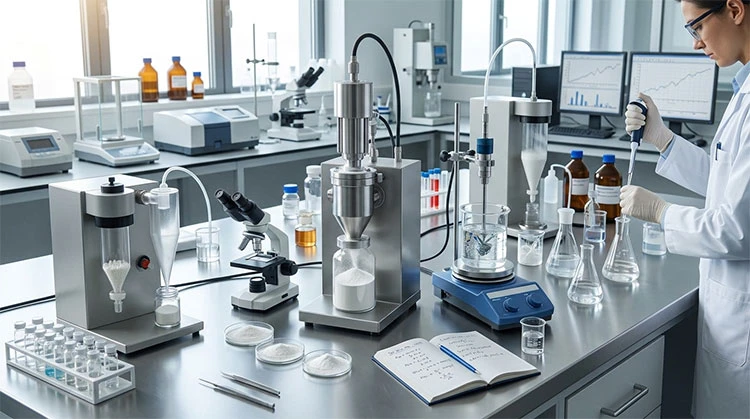
Micronization process increases the surface area and thus promotes dispersion in aqueous systems.
A common application of jet milling is to obtain a uniform distribution of fine powder.
The smaller the particle size, the better the taste in beverages.
2. Encapsulation systems
Lipids are used for the encapsulation of items in beverage or cosmetic systems, enhancing dispersibility.
By forming inclusion complexes with cyclodextrins, the aqueous compatibility of the product can be improved.
The spray-drying methods are well known for their scalability.
3. Co-solvent systems
Solubility of DHM in liquid formulations can be enhanced by a blend of ethanol and water or a mixture of polyols.
The type of co-solvent selected will rely on the final product category and regulatory needs.
The stability factors and processing considerations of DHM Powder.
Understanding stability is essential when using DHM in commercial formulations.
1. pH sensitivity
DHM works better at a range of pH 4.5 to 7.0.
Sometimes, the formulations are not stable and may change with time under extreme alkaline conditions.
2. Thermal exposure
Integrity of DHM may be affected by the high-temperature processing, particularly in direct heat applications.
Encapsulated formats offer better resistance to processing, like pasteurization.
3. Light and oxygen exposure
To prevent oxidative degradation, DHM should be stored in opaque, airtight containers.
There is the potential for using antioxidant systems as part of a complex formulation to enhance shelf stability.
4. Storage conditions
It is recommended to store in a cool, dry, and light-free environment.
Powder flowability can be kept in humid conditions by using hygroscopic carriers.
Conclusion
It is a versatile ingredient for the functional beverage, nutraceutical, and cosmetic sectors, with its primary benefit being adaptability in formulation, stability and formulation strategies, and compatibility with contemporary clean-label product design. The processing techniques, which include encapsulation, solubilization, and particle engineering, play a crucial role in its practical applications, enabling the seamless incorporation of DHM into various end-use applications while maintaining the required texture, stability, and sensory characteristics. In summary, DHM is a versatile ingredient platform that can be used by developers to create innovative botanical formulations in the food, drink, and personal care industries.
Sentian Bio provides free samples, OEM/ODM customized products, and professional technical support. Contact us anytime at sales3@sentianbio.com or LEAVE A MESSAGE!
FAQ
1. What is DHM used for in beverage manufacturing?
DHM is employed as a botanical ingredient for functional beverages in the form of DRG or powdered beverages, and sometimes the solubilization or dispersion of DHM elements in these formulations is necessary.
2. How is DHM used in capsule and tablet formulations?
DHM is combined with excipients and is granulated or directly compressed to ensure even distribution of content in nutraceuticals.
3. What formulation challenges affect DHM usage?
Limited water solubility, processing temperature sensitivity, and stabilization requirements in the liquid system are the primary difficulties.
4. How is DHM stabilized in cosmetic formulations?
To distribute uniformly in creams, serums, and gels, DHM is stabilized by various emulsifiers, solubilizers, and encapsulation systems.
References
1. Li, X., et al. (2021). "Flavonoid-based compounds in functional ingredient development: formulation and stability considerations." Food Chemistry, 352, 129299.
2. Zhang, Y., & Wang, J. (2022). "Advances in botanical extraction and encapsulation technologies for nutraceutical applications." Journal of Functional Foods, 89, 104950.
3. European Food Safety Authority (EFSA). (2023). "Guidance on botanical ingredients in food supplements and safety assessment frameworks." EFSA Journal, 21(4), e07891.
4. Smith, R. et al. (2020). "Spray-drying and microencapsulation techniques for polyphenol stabilization in food systems." Trends in Food Science & Technology, 98, 45–58.