


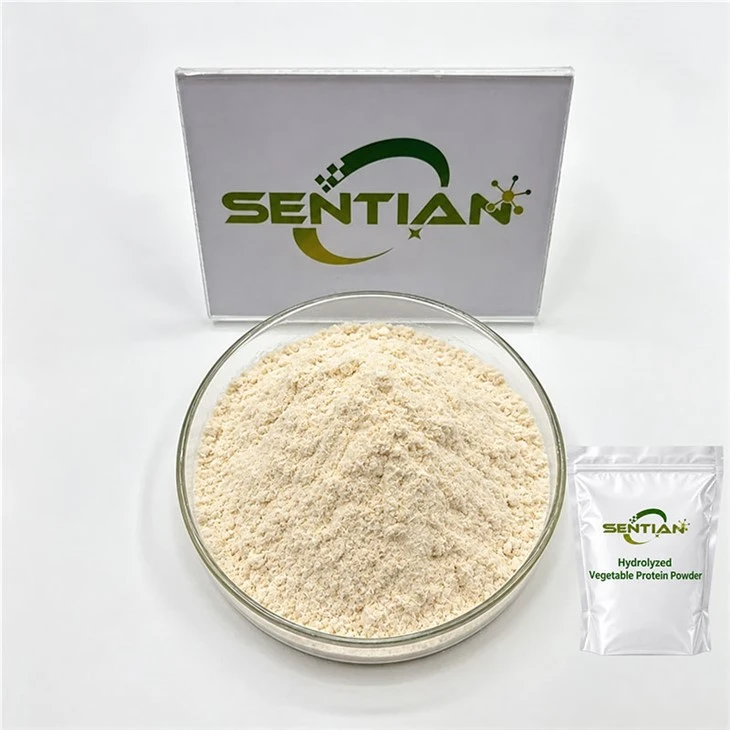
What is HVP Powder?
HVP Powder is an essential food-grade ingredient, which is obtained by hydrolysis of plant protein (usually corn, wheat, or soybean meal) to low molecular weight peptides and free amino acids. Specially formulated for use in food manufacturers, flavour processors, and commercial seasoning blenders, this soluble brown powder is a savory foundation that will add a rich, lingering flavour to processed food matrices, providing the authentic umami flavour. In industrial applications, it can serve as a highly reliable flavour builder to add complexity to flavour prepared soups, processed meats, instant noodle seasoning, marinades, and extruded snacks. Its technical applications stem from its outstanding chemical stability, complete water solubility, and resistance to extreme heat, pH extremes, and prolonged storage. It is used by product formulators as a functional ingredient to control and match overall flavor top notes in their formula to enhance savory perception and enable organoleptic control, while maintaining their standard manufacturing process. In the commercial food manufacturing process, it enables the optimization of the recipe economics, with a higher quality of sensory product and at a lower cost and moisture than any other HVP, whilst being shelf-stable and scalable.

COA
| Item | Specification | Result |
| Appearance | Light-yellow to Brown, Free-Flowing Powder | Conforms |
| Odor & Taste | Characteristic Savory / Umami, No Off-Odor | Conforms |
| Total Nitrogen (as N) | ≥ 4.0% | 4.62% |
| Amino Nitrogen (as N) | ≥ 2.5% | 2.86% |
| Sodium Chloride (NaCl) | ≤ 42.0% | 38.70% |
| Moisture | ≤ 7.0% | 4.82% |
| Ash | ≤ 50.0% | 46.35% |
| pH (10% Solution) | 5.0–6.5 | 5.82 |
| Water Insoluble Matter | ≤ 1.0% | 0.32% |
| 3-MCPD | ≤ 0.02 mg/kg | <0.01 mg/kg |
| Lead (Pb) | ≤ 1.0 mg/kg | <0.10 mg/kg |
| Arsenic (As) | ≤ 0.5 mg/kg | <0.05 mg/kg |
| Total Heavy Metals | ≤ 10.0 mg/kg | <2.0 mg/kg |
| Total Plate Count | ≤ 10,000 CFU/g | 1,200 CFU/g |
| Yeast & Mold | ≤ 100 CFU/g | <10 CFU/g |
| Coliforms | ≤ 3 MPN/g | <3 MPN/g |
| E. coli | Negative / 10 g | Negative |
| Salmonella | Negative / 25 g | Negative |
Sentian Bio provides free samples, OEM/ODM customized products, and professional technical support. Contact us anytime at sales3@sentianbio.com or LEAVE A MESSAGE!
Industry Background
The Global Hydrolyzed Vegetable Protein (HVP) industry is a key player in the technical food ingredient market, which began as an industrial approach to provide consistent and reproducible savory notes in commercial manufacturing at an affordable cost. It has been developed in the past to provide flavour uniformity in large-batch culinary bases and has developed from acid hydrolysis technology to more sophisticated enzymatic degradation technologies. This engineering solution allows raw material producers to engineer the amino acid profile of their products, control color formation, prevent unwanted thermal-processing by-products, and easily meet demanding international safety requirements. It is a key supplier to multinational flavor houses, seasoning compounders in the industry, and food conglomerates, with the convenience food sector often being the most direct use. With the quick globalisation of convenience foods, ready-to-eat culinary food preparations, and structured plant-based meat matrices, it is a fundamental supplier to commercial food conglomerates, food seasoning compounders in the industry, and multinational flavor houses. Today, industrial raw material supply chains are moving towards diversification, where new raw material sources (maize, rice, and pea protein) are needed to reduce the vulnerability of the global supply chain and meet critical allergen-segregation requirements, in addition to providing cost-efficient, highly stable, and consistent umami foundations to modern food processing companies.
Development History
Decades of food-ingredient processing innovation have culminated in it. HVP's history predates that of commercial food processing, dating back to the late 19th century when protein was first commercially processed into amino acids. The early food scientists were aware that if proteins in plants were boiled in hydrochloric acid, the peptide bonds would break down and release free glutamic acid, which gave meat-like, savory flavors to the food, and this led them to believe that they could develop a way to do it on a commercial scale to make a broth base. Industrial-scale food processing and convenience foods escaped from the kitchen and into the larger market during the mid-20th century, making HVP a key component in the seasoning industry around the world. But in the late 1990's and early 2000's, a significant technical change occurred due to the diverse modern commercial requirements, which led to the change of the industry toward more controlled enzymatic hydrolysis and refined neutral-acid extraction. This technological development allowed manufacturers to optimally set the degree of hydrolysis parameters, reduce the chloropropanol content, and optimise the production yield of nitrogen. In today's times, modern Hydrolyzed Vegetable Protein Powder production uses gentle spray-drying methods, advanced filtration, and a variety of botanical raw materials such as maize and pea to provide highly standardized and low-salt powder products with no GMOs for high-speed, automated production lines.

Application
1. Processed Meat and Poultry Processing:
Hydrolyzed Plant Protein is used as an active brine supplement and as a flavouring for sausages, cured meats, or injected poultry products to increase juiciness and heat retention and add depth to the flavour during hot cooking.
2. Dehydrated Soups and Gravy Compounds:
The ideal base taste foundation for dry soup mixes, stock cubes and instant gravy powders; instantly releases umami flavor, is quickly soluble in water, and is thermally stable.
3. Snack Seasoning Formulations:
Used as a carrier and major flavouring component for potato chips, extruded corn snacks, roasted nuts, and savory snack pretzels as a seasoning dust, ensuring uniform distribution of the seasoning and good flavour.
4. Prepared Meals and Frozen Entrees:
Proven to be a successful flavor binder in frozen dinners, canned stews and retorted sauce bases, maintaining the organoleptic integrity and not causing degradation of the flavor during freeze-thaw cycles and over the extended shelf life.
5. Industrial Sauce and Condiment Manufacturing:
Perfectly balances sharpness and helps to draw out the saltiness from soy sauce blends, barbecue glazes, dip sauces and marinades and adds to the depth of liquid flavour without clouding the liquid.
6. Alternative Protein and Vegetarian Products:
Made of plant-based ingredients, added to plant-based burger patties, meatless sausages, and textured vegetable protein formulations to help fill the flavor void with authentic and complete savoriness and mask the raw grain off-notes.
FAQ
What primary function does HVP powder serve in industrial food manufacturing?
It functions as a flavor compound, imparts a rich and savory umami flavor, and helps balance the taste of processed foods.
How does HVP powder maintain stability during high-temperature food processing?
It is very thermo- and pH-stable, and can maintain sensory characteristics and flavor performance during baking, extrusion, and retorting.
Can HVP powder be incorporated into dry seasoning and spice blends?
Yes, it's extremely fine, free-flowing, and low hygroscopic, which makes it possible to blend without any clumping in dry applications.
Does HVP powder affect the solubility or appearance of liquid sauce formulations?
It fully dissolves in ambient and hot water, does not affect clarity, and doesn't cause sediment buildup in liquid systems.
What packaging formats are available for bulk commercial HVP powder orders?
It is usually packaged in multi-wall kraft paper bags with moisture-resistant polyethylene liners for standardized packaging and bulk handling in the factory.
Production Process

Certificate

Exhibition
