Papain is a proteolytic enzyme derived from the latex of raw papaya fruit (Carica papaya), widely known for breaking down complex proteins into smaller peptides and amino acids. As a heat-resistant cysteine protease, it is extensively used as a meat tenderizer, in digestive aids, and to reduce inflammation, swelling, and pain.
Source: Extracted from the milky latex of immature papaya fruit.
Digestive Health: It breaks down proteins, helping to ease bloating, constipation, and symptoms of indigestion.
Inflammation Reduction: Used to manage swelling and pain associated with surgery, trauma, or infections like sore throat.
Industrial Applications: Commonly used in the food industry for tenderizing meat and clearing beer, as well as in cosmetics and contact lens cleaners.
Optimal Conditions: Functions best at temperatures between 60–70°C and a slightly acidic pH.
Everything You Need to Know
What is the papain enzyme used for?
What foods are high in papain?
Papaya. The enzyme found in papaya is called papain, which helps to break down protein, says Lavy. Heat can damage papain, so make sure to consume papaya raw for maximum digestive perks-for example, papaya wedges as a breakfast side or cubed and added to salads and smoothies.
Is papain safe to take daily?
When taken by mouth: Papain is commonly consumed in foods. It is possibly safe when taken as medicine in doses up to 1200 mg daily for up to 9 weeks. But taking very large amounts of papain is possibly unsafe. Very large doses might cause severe throat and stomach damage.
What is papain used to relieve symptoms of?
In the medical field, papain can be used to treat necrotic tissues, dyspepsia and other digestive ailments, ringworm and roundworm infections, skin lesions and ulcers, eczema, and other skin diseases and kidney disorders. Papain is used in detecting stomach and intestinal cancers and also in correcting diphtheria.
Main Benefits:
Digestive Aid: Helps breakdown meat and high-protein foods.
Inflammation & Pain: Used to treat sore throat, reduce swelling after dental surgery, and ease neuropathic pain.
Skin Care: Known to treat wounds, burns, and skin lesions
It may help ease a sore throat --- Papain may help relieve sore throat symptoms, such as swelling, pain, and redness.
It may reduce pain and inflammation --- Research suggests papain may help reduce inflammation and pain related to dental surgery, swelling related to joint conditions like bursitis, as well as neuropathic pain such as fibromyalgia.


It may aid digestion --- Papain may also ease digestive symptoms like constipation and bloating. These symptoms can be related to digestive conditions such as gastroesophageal reflux disease (GERD), which can also cause symptoms like acid reflux or heartburn.
It may help heal wounds --- Research also suggests that papain may be used as a natural remedy for skin ulcers, wounds, and other skin conditions.
It may help prevent obesity --- There is some animal research to suggest papain can help reduce the progression of weight gain by lowering the accumulation of body fat and blood fat.
ANALYTICAL RESULTS
| Test Item | Specification | Result | Method | Conclusion |
|---|---|---|---|---|
| Appearance | Off-white to light brown powder | Light brown powder | Visual | Conforms |
| Odor | Characteristic | Complies | Organoleptic | Conforms |
| Identification | Positive | Positive | Enzyme activity / Casein digestion, House Method | Conforms |
| Papain Activity | ≥ 800,000 USP U/g | 865,200 USP U/g | USP Enzymatic Assay (Casein Method) | Conforms |
| Loss on Drying | ≤ 7.0% | 5.12% | USP <731> | Conforms |
| Ash | ≤ 5.0% | 2.36% | USP <281> | Conforms |
| pH (1% solution) | 5.0 – 7.0 | 6.18 | USP <791> | Conforms |
| Lead (Pb) | ≤ 1.0 ppm | 0.06 ppm | ICP-MS | Conforms |
| Cadmium (Cd) | ≤ 0.5 ppm | < 0.05 ppm | ICP-MS | Conforms |
| Arsenic (As) | ≤ 1.0 ppm | 0.09 ppm | ICP-MS | Conforms |
| Mercury (Hg) | ≤ 0.1 ppm | < 0.01 ppm | ICP-MS | Conforms |
| Total Plate Count | ≤ 1,000 CFU/g | 180 CFU/g | USP <61> | Conforms |
| Yeast & Mold | ≤ 100 CFU/g | < 10 CFU/g | USP <61> | Conforms |
| Coliforms | ≤ 10 CFU/g | < 10 CFU/g | USP <62> | Conforms |
| Escherichia coli | Negative / g | Negative | USP <62> | Conforms |
| Salmonella | Negative / 25 g | Negative | USP <62> | Conforms |
| Staphylococcus aureus | Negative / g | Negative | USP <62> | Conforms |
| Residual Ethanol | ≤ 5,000 ppm | 240 ppm | GC-HS / ICH Q3C | Conforms |
| Residual Hexane | ≤ 290 ppm | < 10 ppm | GC-HS / ICH Q3C | Conforms |
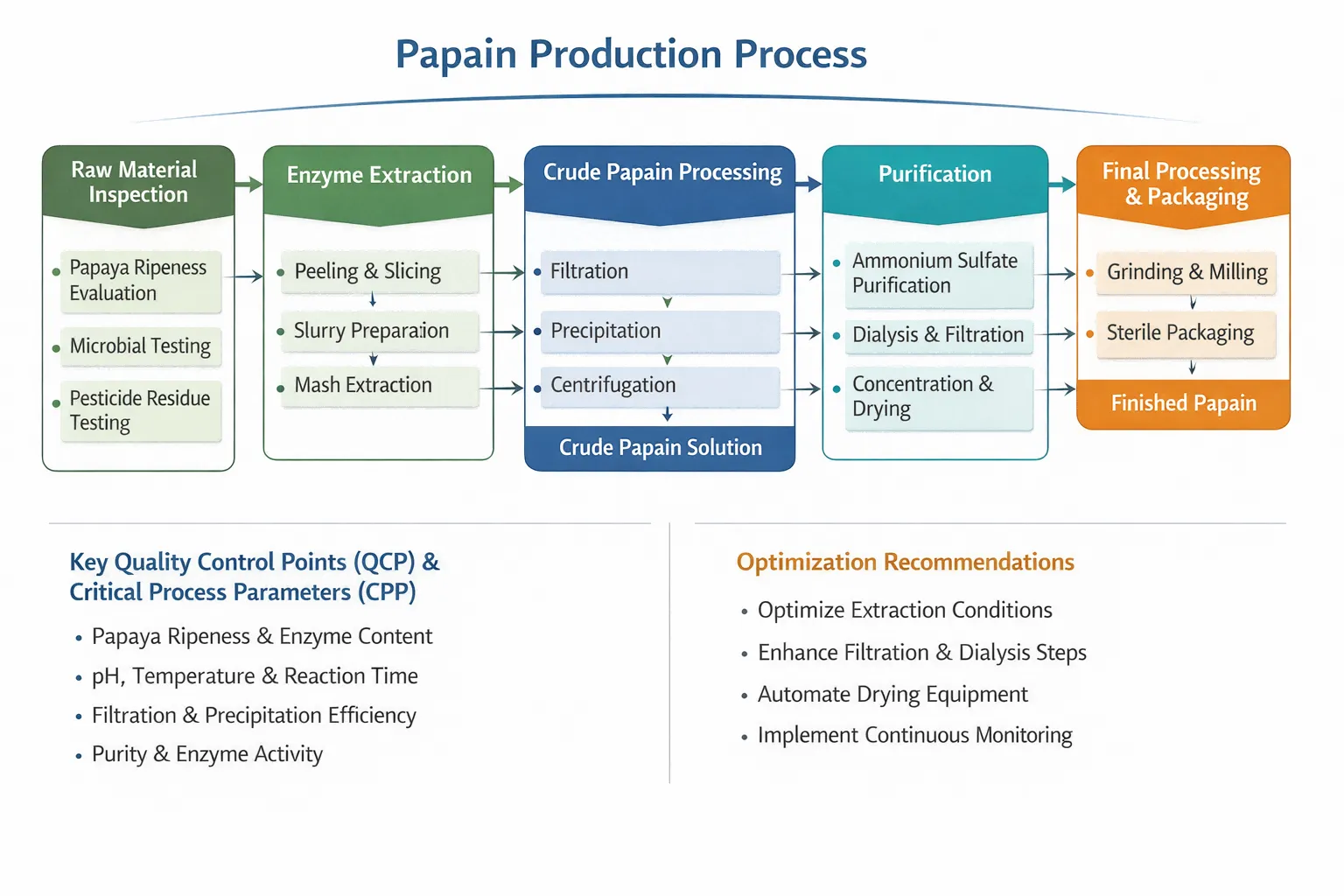
Production Process